
Archbishop Gallagher calls on states to renounce nuclear weapons at IAEA meeting
Speaking on September 15 at the International Atomic Energy Agency's 70th General Conference in Vienna, Archbishop Paul Richard Gallagher urged states to abandon nuclear weapons and called for ethical governance of atomic technology
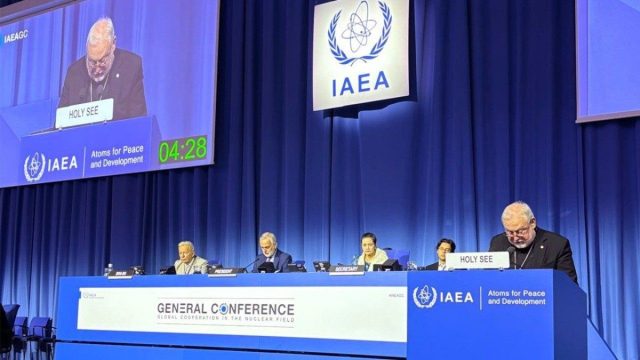
Archbishop Paul Richard Gallagher, the Holy See's Secretary for Relations with States and International Organizations, addressed the 70th General Conference of the International Atomic Energy Agency (IAEA) in Vienna on September 15. He called on states to abandon nuclear weapons and said the use of atomic technology demands clear ethical commitments and a level of responsibility that matches its potential.
Gallagher said the peaceful use of nuclear energy can help meet rising global demand for power and shows how scientific progress can be put at the service of humanity. That use must be responsible, he said, and must not lead to the spread of weapons. He specifically called for nuclear facilities to be protected in armed conflicts, describing their security as a top concern.
Gallagher conveyed the good wishes of Pope Leo XIV to those taking part in the conference and reaffirmed the Vatican's long-standing commitment to the IAEA, which it joined as one of the original signatories. Nuclear technology must be governed by sound ethical principles and directed toward peace and integral human development, he said. The Holy See's position remains firm despite changes in the geopolitical and technological landscape, he added.
He also pointed to the IAEA's particular role in promoting the peaceful use of nuclear energy, singling out its technical cooperation program and the support it gives to national institutions. But responsibility in this field does not rest with the agency alone, he said: states that do not have nuclear weapons also have a duty not to acquire them.
Nuclear safety and technological oversight
Marking the 40th anniversary of the Chernobyl disaster, Gallagher said the benefits of the peaceful use of nuclear technology must be balanced by responsibility and a commitment to safety. Attacks on nuclear facilities are unacceptable, he said, because they could cause radioactive leaks with devastating consequences for people and the environment.
Gallagher turned to the arrival of artificial intelligence in the nuclear field, calling for rigorous ethical reflection and responsible governance. Citing Pope Leo XIV, he warned of the risk that emergencies end up dictating the course of decisions. The use of artificial intelligence in the nuclear sector requires effective human oversight, strong safety standards and closer international cooperation, he said. Without those conditions, he added, these technologies are unlikely to contribute to peace and to the well-being of present and future generations.


