Pope Leo XIV says the faithful cannot be passive in the liturgy
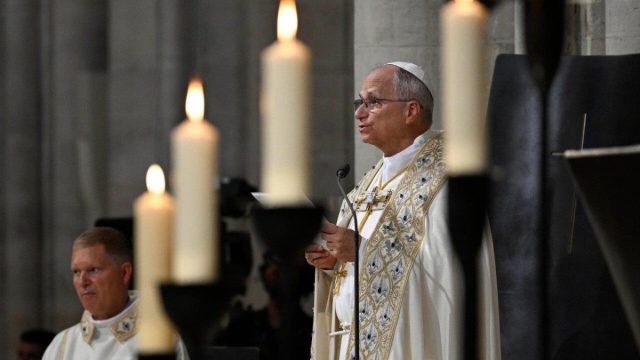
At his general audience in St. Peter's Basilica on August 26, Pope Leo XIV explained why the Second Vatican Council undertook the liturgical reform and said the faithful must take part actively and devoutly

At his general audience in St. Peter's Basilica on Wednesday, August 26, Pope Leo XIV spoke about the reasons that led the Second Vatican Council to undertake the liturgical reform. He said the liturgy is a living expression, deeply rooted in the tradition of the Church, and that it should help the faithful to take part actively and devoutly. "The participation of the faithful cannot be passive," he said.
Leo said the liturgical reform did not appear suddenly but had taken shape over time, in line with what the popes had done since the early 20th century and with the calls of the Liturgical Movement. He recalled a 1962 letter by the then archbishop of Milan, Cardinal Giovanni Battista Montini, the future St. Paul VI, who described the liturgy as a sincere expression of the divine and the human and as a means of dialogue with God.
In that letter, Montini wrote that the faithful "cannot and must not remain mute and passive. Their material presence cannot be reconciled with their spiritual absence." Leo said those words echo Sacrosanctum Concilium, which urges Christians not to be mere spectators of the mystery of faith but to take part actively in the sacred action, understanding the rites and the prayers.
The pope said the gestures and words of the liturgy are essential if the faithful are to experience a real relationship with God and to come into contact with the saving event. The conciliar reform focused on the core of the Church's experience, he said. It sought to make the riches of the biblical texts and prayers more accessible to all the faithful and to simplify the order of celebrations compared with the earlier liturgical books.
Leo said the liturgy is made up of elements that cannot change, because they are of divine origin, and others that can be modified over time. Those changes are always made under the guidance of the sacred hierarchy and the Holy Spirit, adapting to the needs of the times and of souls. That distinction goes back to Pius XII's encyclical Mediator Dei.
The desire for a "general reform" was not improvised, the pope said, but had been evident in what the popes did from the start of the 20th century, in line with the requests of the Liturgical Movement. Pius XI's apostolic constitution Divini Cultus had already addressed the need for the faithful not to attend celebrations as strangers. Pius XII reorganized the rites of Holy Week so that they would be celebrated at the hours corresponding to the events of Easter, and St. John XXIII promoted a simplification of the rubrics of the Breviary and the Missal.
But Leo warned that some principles of the reform have been misinterpreted or treated as absolutes in the period after the council, which has led to abuses in some sectors of the Church. He said a correct understanding of those principles is essential to avoid such deviations, and that the liturgical reform of the Second Vatican Council stands in continuity with the living tradition of the Church.
Closing his catechesis, Leo said bishops and priests are responsible for safeguarding and promoting the liturgy, and he called for celebrations that reflect the unity, holiness, catholicity and apostolicity of the Church. "It is therefore the primary responsibility of pastors, of bishops, but also of each priest individually, to safeguard and promote a liturgy that, in respect for the liturgical norms, shines with noble simplicity," he said.