Pope Leo XIV says singing at Mass is prayer, not decoration
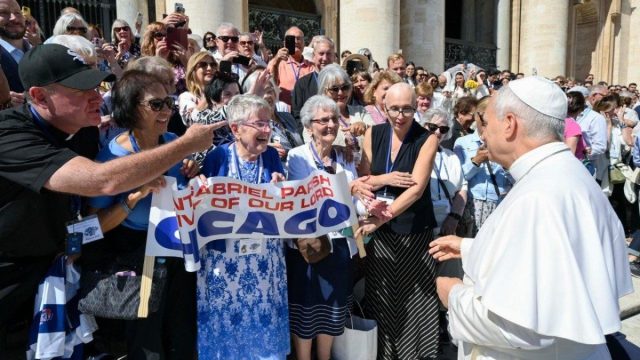
At his general audience in St. Peter's Basilica on August 19, 2026, the pope devoted his catechesis to sacred music, calling it a form of prayer and urging care in the choice of liturgical repertoire

Pope Leo XIV spoke about sacred music and its place in the liturgy at his general audience in St. Peter's Basilica on August 19, 2026. The talk was part of a series of catecheses he has devoted to Sacrosanctum Concilium, the Second Vatican Council's constitution on the liturgy, which describes the Church's musical tradition as a "treasure of inestimable value."
Singing during Mass should not be seen as a mere ornament, the pope said. It is a form of prayer that unites the community and expresses the faith of believers. "In the liturgy, singing and playing mean praying, tuning one's own heart to that of our sisters, our brothers and God," he said.
He cited St. Augustine, who said that "singing belongs to one who loves," and said the affective dimension of singing opens the heart to divine grace.
Choosing music for the liturgy carries a theological responsibility, the pope said. Compositions should rise above passing fashions and personal preferences, he said, and should be chosen for musical quality, nobility and simplicity so that the assembly can take part.
The same applies to the texts, he said, which should have depth and draw on Sacred Scripture and Tradition, preserving the principle lex orandi, lex credendi, the law of prayer is the law of faith.
On the participation of the faithful, Leo XIV said Sacrosanctum Concilium sets out a balance among responses, acclamations, singing and moments of sacred silence. Gregorian chant and the organ keep a privileged place in the liturgy, he said, though other instruments and styles are not excluded, provided they suit the dignity of the church building and the various local cultures.
The pope urged composers to write new works faithful to the Church's musical heritage, and called for sacred music to be taught in seminaries and houses of formation. He closed the catechesis by quoting St. Ignatius of Antioch, who urged the faithful to "become a choir so that, harmonious in accord and taking the tonality of God in unity, they may sing in unison to the Father."