Brazilian film about the rosary opens in Spanish theaters on October 23
The Power of the Rosary mixes a fictional drama with real testimonies and presents the rosary as a spiritual battle open to every generation, from children to adults. It drew more than 100,000 viewers in Brazil after opening there in May, and European Dreams Factory is bringing it to Spain
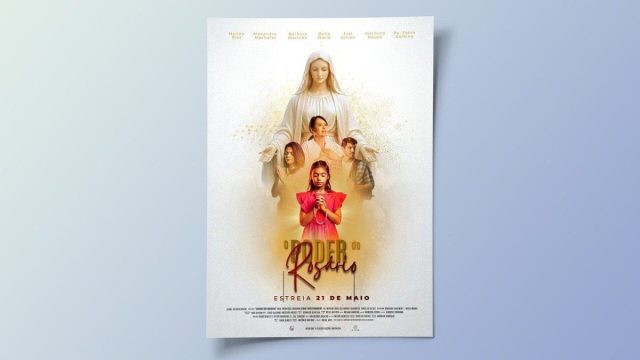
The Power of the Rosary (El poder del Rosario), a Brazilian film produced by Kolbe Arte Produções and Stone Produções, opens in Spanish theaters on October 23, distributed by European Dreams Factory. The film opened in Brazil in May on 200 screens, spent three weeks among the country's 10 most-watched titles and drew more than 100,000 viewers.
Ângela Morais, executive director of Kolbe Arte and international president of the Militia of the Immaculata, a Marian association, from 2012 to 2020, said the project grew out of a personal experience. After a Marian retreat, she felt what she describes as "an irrepressible urge to make a film in Brazil about the real power of the rosary." Morais then invited Tiago Benetti, of Stone Produções, to co-produce the project.
A drama so viewers see themselves
The filmmakers chose fiction over documentary because, Morais said, non-fiction tends to hold viewers at a distance, while a drama makes the audience recognize their own lives in the characters. The result is a classic, optimistic melodrama with bright photography and a happy ending, but without the usual ingredients of the genre: there is no romance and no vengeful villain.
The film runs one hour and 40 minutes. About 85 percent is the fictional story, and the remaining 15 percent is given over to real testimonies and commentary on the rosary, which the characters come across naturally on Brazilian television or in podcasts they listen to while traveling.
Morais rejected the idea that the rosary is an outdated devotion or one reserved for the elderly. "We want to put on the big screen what we already apply in our own lives: that prayer is a brute-force weapon to crush pain, wrest forgiveness and recover hope," she said. She began praying it at 18 and still does at 49.
A sick girl, a crash and several paths of faith
At the center of the plot is Helena, a devout girl who wants to meet her father, Roberto, a man with addictions and debts whom her mother, Sandra, left years earlier. Sandra has second thoughts after hearing the real testimony of a woman marked by growing up without a father, and decides to attempt a reunion.
On the drive to another city, the car is involved in a serious crash. It is caused in part by the recklessness of André, a young photographer, who got behind the wheel drowsy after spending the night with a model he had just met. Helena is seriously injured. André picks up the girl's rosary at the scene and, feeling responsible, stays tied to the injured mother and daughter.
Several characters converge at the hospital. Dulcinia, André's housekeeper, is a deeply devout woman who always works with Catholic radio and television on in the background. She tells the photographer: "Ask the Holy Spirit for healing and hold on to Our Lady." There is also Concepción, a figure at once maternal and mysterious, who wears a white coat and comes and goes from the hospital with a puzzling freedom. She encourages André with the words: "The rosary is powerful; if you pray it, pray it with faith!"
Meanwhile, the girl's story goes viral on social media and people gather at the hospital to pray. Besides the crash, she has leukemia and needs a transplant that is highly unlikely.
The rosary's focus on Christ
André begins his own approach to the rosary through podcasts and videos, among them those of Fabio Galdino, a priest and exorcist. The film stresses that the prayer is centered on Christ: one of those videos urges viewers to "pray the rosary a great deal, contemplate the mystery of the life of Christ and the deeds of Mary." A religious sister adds that in a frantic society that does not reflect, the rosary brings calm.
The film also refers to National Rosary Day, recently introduced in Brazil, and features the congresswoman who promoted it. The film has the backing of theologians, influencers and public figures in Brazil. They include the influencer Maria Gabriela, Rafa Zicati, Leo Dominus, the theologian Frei Geilson, of the group Som do Monte, and the religious of the Instituto Hesed, known for their music, their evangelization through the media and their promotion of perpetual adoration and Divine Mercy.
The bishop of Piracicaba, Devair Araujo, has also voiced support. Part of the financing came from the Catholic healthcare group MaterDei, whose facilities appear in the film. The score is by Thiago Braddo, with songs by Thiago Benetti and Barbara Marinho in a slow-tempo praise and worship style.
Helena as a symbol of a child's faith
The film includes the young Helena to show that a child can develop a mature and direct relationship with the faith from childhood. Of those who mock the rosary as something for grandmothers, Morais said she feels "a deep contempt for their ignorance and an enormous gratitude toward those women," because they have guarded what she calls "a war treasure that belongs to every generation."
The film closes with a series of short testimonies from people who credit the rosary with changes in their lives, and who insist that Mary leads to Jesus. For Morais, the film's success in Brazil is measured not in box office but in its ability to open conversations within families or to prompt a first step toward reconciliation.
Faith on screen in an industry that pushed it out
Morais said the film industry made a mistake in pushing faith off the screen. It ignores, she said, that spirituality governs the lives of millions of people who are "hungry for stories treated with depth and respect." She said the film works just as well for non-believing viewers as a raw story about family, pain and emotional survival.
"The film is an open challenge, not an ideology test where we demand that viewers think like us to get into the theater," she said.