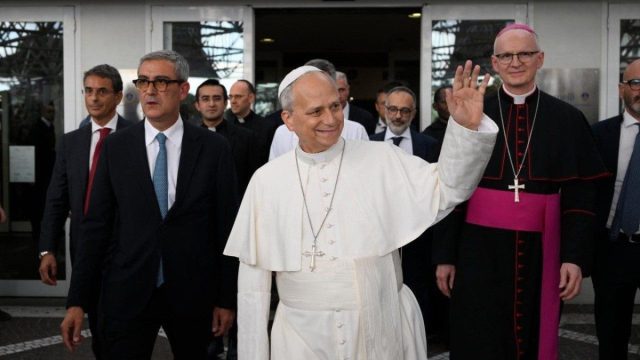
Chris Pratt narrates documentary on St. Peter, with a recorded appearance by Pope Leo XIV
The Rome Film Festival screened "Pétros ení. Descubriendo los Orígenes" on October 16, a documentary on the Apostle Peter narrated by American actor Chris Pratt. Pope Leo XIV closes the film with a recorded reflection on fragility as the foundation of apostolic faith
The Rome Film Festival hosted the premiere on October 16 of "Pétros ení. Descubriendo los Orígenes" (Pétros ení: Discovering the Origins), a documentary about the Apostle Peter produced by AF Films with Vatican Media and the Fabbrica di San Pietro, the Vatican office responsible for the upkeep of St. Peter's Basilica. The film marks the 400th anniversary of the consecration of the basilica on November 18, 1626. The screening took place at the Teatro Studio "Gianni Borgna" at the Auditorium Parco della Musica. The audience broke into applause for Leo XIV, who is in the hospital, when Paolo Ruffini, prefect of the Dicastery for Communication, said he hoped the pope's recovery after surgery would continue without setbacks.
Direction, narration and Pratt's role
Paula Ortiz directed the film from a script by Andrea Tornielli, with editing by Pablo Gómez-Pan. The narrator is the American actor Chris Pratt. Before the screening, Pratt addressed the audience in a video message describing how deeply the work on the project had involved him. In an interview at the Vatican, Pratt, who said he returned "to the Catholic faith about six years ago," described the shoot at St. Peter's as something that is "helping to define his own faith." He called the basilica "a special and sacred place," and said the documentary had been a personal journey rather than a professional assignment.
The Christian paradox at the center of the film
In his remarks of thanks, Ruffini said the film's main appeal lies in what he called "the Christian paradox": a Church that Jesus entrusted to the guidance of a weak and sinful man, the Galilean fisherman who denied him. When his eyes met Christ's, he was forgiven. That paradox also runs through the reflection Pratt shares with viewers over the roughly 60 minutes of the film. Peter was "an imperfect man, weak, a human being," whose strength came not from his own abilities but from the grace of Jesus and his faith in God.
Staging and historical detail
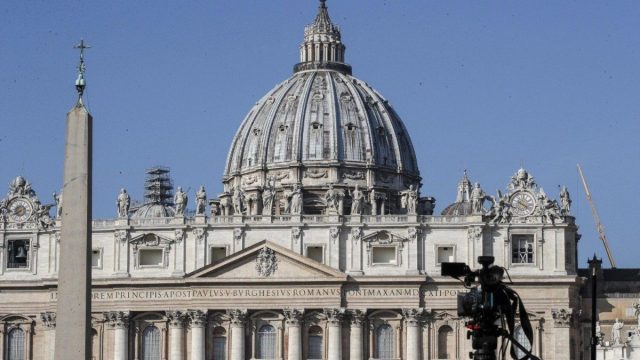
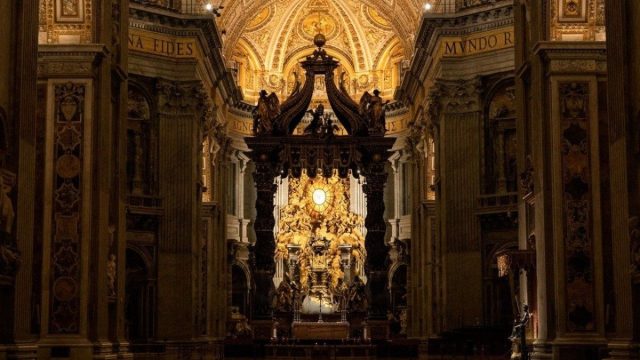
The documentary takes the viewer through the Vatican Necropolis, opening outdoors in St. Peter's Square at night, with Pratt as an anonymous passerby. As he enters the illuminated basilica alone, the narration traces centuries of history through statues, stones and Christian symbols. The opening credits state that none of the images were treated with artificial intelligence.
The historical account runs from the first excavations ordered by Pius XII during the Second World War to the official confirmation of the discovery of the apostle's remains under Paul VI. The digs were carried out by the sampietrini and the fossori under extremely delicate conditions. The film draws on documents from the Archive of the Fabbrica di San Pietro and includes contributions from Pietro Zander, director and one of the leading specialists on the Vatican Necropolis, along with images and sound recordings of several popes. It also includes historical footage in which the epigrapher Margherita Guarducci sets out her research on the apostle's remains.
Pope Leo XIV on fragility
In the closing sequences, Leo XIV himself speaks inside the basilica to explain why the apostle's tomb lies beneath the church. "When we contemplate the splendor of St. Peter's, the colonnade that opens in an embrace of the world, it is beautiful to remember why this basilica was built precisely here. The reason is that this ground is bathed in the blood of the Apostle," the pope says.
He also recalls Chesterton, who held that the Christian Church was founded on a weak man and is indestructible for that very reason, because no chain is stronger than its weakest link. Leo XIV closes the documentary with his own testimony about the fragile chain of successors that reaches him: "So, link after link, that fragile chain of successors of Peter has reached us. And I too, Bishop of Rome, aware of my own weakness, repeat the profession of faith of the Apostle whom Jesus transformed into a fisher of men: 'You are the Messiah, the Son of the living God.'"
The film premiered while the pope remains at the Gemelli Polyclinic in Rome, recovering from surgery.