Cardinal Cobo asks at Vatican whether the Church prepares couples for weddings or for marriage
Speaking at a Vatican meeting marking 10 years of Amoris Laetitia, the archbishop of Madrid said marriage preparation should be a continuous process rather than a step before the ceremony

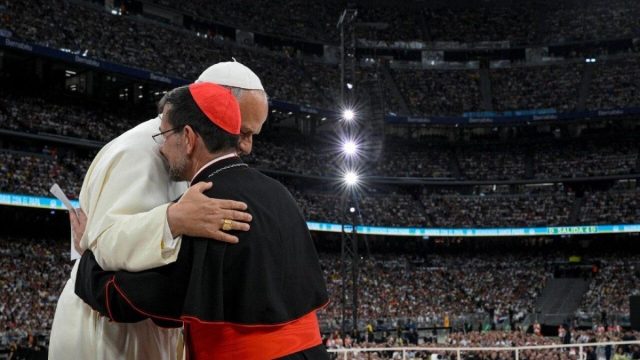
Cardinal José Cobo, the archbishop of Madrid, asked during a talk at the Vatican summit "Ten Years of Amoris Laetitia: Proclaiming the Gospel with Families Today" whether the Church is preparing couples for the wedding or for marriage. His presentation, "Married life. The first years of marriage: a decisive time," was part of a gathering running from October 7 to 14, 2026, marking the 10th anniversary of Pope Francis's apostolic exhortation.
Cobo said many couples come to the parish to marry after living together for several years. "At what point in their story have we arrived as a Church?" he asked. Amoris Laetitia has opened new horizons for dealing with the reality of marriage, he said, but the real challenge is not designing programs. It is understanding couples from the start of their journey.
The marriage bond as the foundation of the family
Cobo centered his talk on caring for the marriage bond and its direct effect on the family that the couple is called to build. "One of the most important legacies parents leave their children is the relationship they have built between themselves," he said. He proposed reorienting pastoral work away from preparation focused on the wedding day and toward accompanying the human, faith and vocational journeys of couples over time.
Cobo gave particular attention to the first years of marriage, a period that can be decisive. "How do we accompany the step from faith lived as a couple to faith lived as a family?" he asked. Christian marriage is not only the story of two people, he said, but an ecclesial vocation that the Church must sustain.
Married couples supporting married couples
Cobo proposed that married couples themselves support other couples, not as experts but out of shared experience. He mentioned specific initiatives such as "El reloj de los novios" (The Engaged Couples' Clock), designed to give couples quality time to talk, review their history and discern together. The aim is to create space for reflection before difficulties appear that can damage the relationship.
Not every marital crisis is inevitable, Cobo said, but offering support before couples reach extreme situations is essential. Prevention and preventive support are the pillars of his pastoral proposal.
The community as support for marriage
Cobo also spoke about the loneliness many married couples live with in their relationship in an increasingly individualized society. He proposed strengthening communities that support married couples, and asked how it could become normal for a couple to ask for help without waiting until they reach the breaking point.
He closed by saying the Church's task does not end with preparing engaged couples but covers the whole journey, from initial discernment to the point where a couple becomes a witness and a support to others. That integral vision, he said, is what Amoris Laetitia encourages: marriage preparation as a continuous process, not a formality before the ceremony.