Pope Leo XIV defends faithful and indissoluble marriage days after lung surgery
At his general audience on October 21, four days after leaving the hospital in Rome, Pope Leo XIV devoted his catechesis to marriage and the family as part of his series on the Second Vatican Council
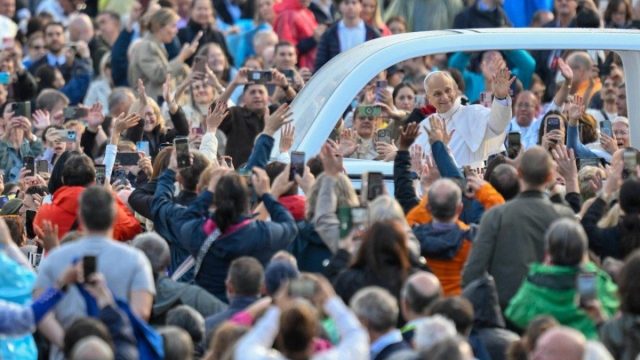
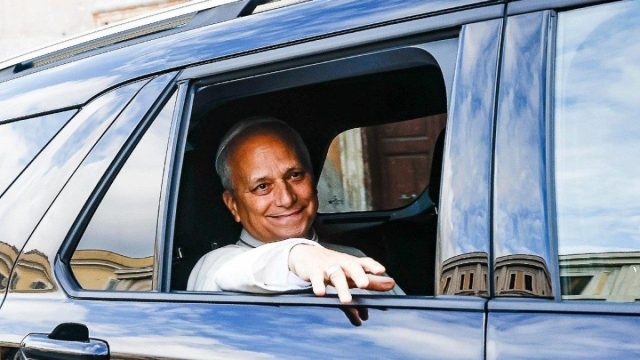
Pope Leo XIV presided over the general audience at the Vatican on Wednesday, October 21, and devoted his catechesis to marriage and the family, part of his series of reflections on the documents of the Second Vatican Council. He did so just four days after being discharged from the A. Gemelli Polyclinic in Rome, where on Tuesday, October 13, he had surgery to remove the lower lobe of his right lung because of an adenocarcinoma. Before turning to doctrine, the pope publicly thanked those who had prayed for him during his recovery: "The first thing I want to say to you is thank you! Thank you for the support of your prayers. Let us thank God for his generosity. Let us all renew our trust in the goodness and mercy of God."
The catechesis centered on the second part of the pastoral constitution Gaudium et Spes, which takes up the most pressing challenges of contemporary life in the light of the Gospel and of human experience. Marriage and the family come first among them. The pope said the document begins from the conviction that the well-being of the person and of society is closely tied to the health of the marital and family community.
A renewed vision of marriage at the Council
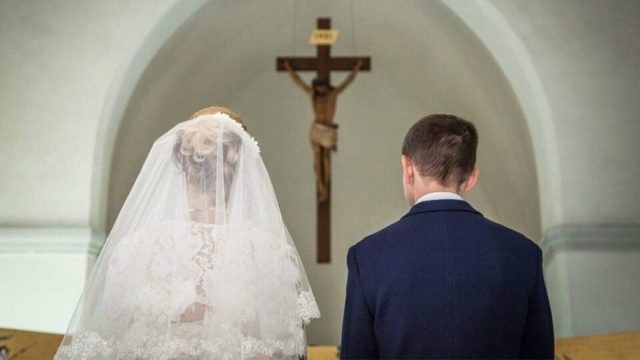
Rather than simply restating the traditional ends of marriage, Gaudium et Spes sets out a renewed vision of the institution, defining it as an "intimate partnership of married life and love." The pope said the document joins the legal dimension of the marriage contract to the idea of the "marriage covenant," understood as the human act by which the spouses give themselves to each other and receive each other. From that mutual self-giving, which makes the two "one flesh," as Matthew 19:6 has it, come both the demand for complete fidelity and the demand for indissoluble unity between the spouses.
Married and parental love, a reflection of the Trinity, is further enriched by the redeeming power of Christ through the sacrament of marriage, so that husband and wife can love each other "as he himself loved the Church and gave himself up for her." The pope set out the Council's teaching on conjugal love. Such love is not confined to the erotic dimension, which also belongs to it, he said, but engages the spouses' whole will. It shows itself in tenderness and affection, and it takes in the integral good of the man and of the woman, who are equal in dignity. That particular intimacy fosters mutual self-giving and enriches the joy the spouses share.
Fruitfulness and the transmission of life
On fruitfulness, the pope recalled that Gaudium et Spes presents children as "the supreme gift of marriage." In passing on and raising human life, which can never be discarded, spouses become cooperators with the love of God the Creator. That responsibility, the pope said, requires the spouses to form their judgment before God about their own good and the good of their children, both those already born and those who may come. Their judgment must conform to the divine law as the Church's Magisterium interprets it in the light of the Gospel.
The pope also took up the Council's position on the relationship between conjugal love and the transmission of life. Gaudium et Spes rejects any real contradiction between the two. In reconciling conjugal love with the responsible transmission of life, the document insists on preserving, within a context of genuine love, both the meaning of mutual self-giving and the meaning of human procreation. From this follows, in the conciliar text the pope quoted, that "life from its conception must be safeguarded with the utmost care," with the resulting rejection of abortion and infanticide, and that the acts proper to married life must be treated with great reverence.
The family's social role
Closing his catechesis, the pope recalled that Gaudium et Spes also underlines the social role of the family, which it calls "a school of deeper humanity" and "the foundation of society." He said that commitment carries particular urgency today, as shown by the pastoral attention of the popes since the Council. That includes the two synodal assemblies called by Pope Francis, which the heads of the Eastern Catholic Churches and the presidents of the bishops' conferences discussed recently.
The pope ended with a prayer: "May the Holy Family of Nazareth light our way and protect families throughout the world."