Vice President JD Vance Answers Vatican Criticism of His Immigration Policies
The vice president said on a New York Times podcast that he has spoken with Pope Leo XIV in recent months and considers the relationship constructive despite disagreements over immigration, Iran and deportations

JD Vance, the vice president of the United States, responded to Vatican criticism of his immigration policies, saying he maintains a constructive relationship with both Pope Francis and his successor, Pope Leo XIV, despite tensions over immigration, the situation in Iran and mass deportations.
Vance made the comments on June 18, 2026, on a podcast hosted by New York Times columnist Ross Douthat. He discussed his personal ties to both popes and the differences that have emerged between his administration and the Holy See on foreign and migration policy.
Vance was one of the last people to meet with Pope Francis before the pope's death in 2025. In his new book, "Communion: Finding My Way Back to Faith," he describes that meeting and his later dealings with Vatican diplomats.
Pope Francis publicly criticized the immigration policies Vance defends. Vance said his relationship with Pope Leo XIV remains positive and that he has consulted him recently on various matters. He described the pope as someone with a mission different from his own, but equally legitimate.
"Have I talked to the pope in the last few months? Yes," Vance said, adding that he considers the relationship constructive even though the two hold fundamentally different responsibilities in the world order.
Tensions between Washington and the Holy See
The differences between the administration and the Vatican have grown amid the escalation involving Iran. Pope Leo XIV has voiced disagreement with several foreign policy decisions by President Donald Trump.
Vance said the pope's responsibility is to preach the Gospel and offer his view on world affairs. He said conflict with his own political positions follows naturally from that pastoral role.
"His role, I think, is to preach the Gospel and to offer his opinions about how he thinks we're doing. And, fundamentally, that's inevitably going to lead to some conflict," Vance said.
Cardinal Pietro Parolin, the Vatican secretary of state, also appears in the book. Vance criticizes his meeting with Parolin and describes their conversation on migration as "too abstract to be useful."
Ukraine and Gaza came up in a conversation with Vatican officials that Vance called "substantive." He said he was disappointed that officials of the Holy See made no specific, detailed requests on migration.
Vance assessed the concrete appeals made by Pope Francis differently. He said those interventions led him to study the social teaching of the Church more closely and to think about its political implications.
Immigration and Catholic teaching in the political debate
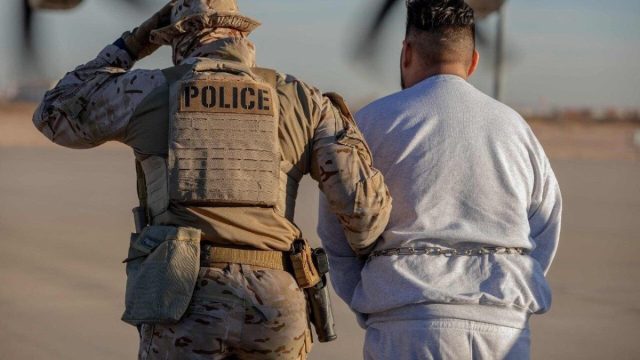
Immigration is at the center of the controversy surrounding the vice president, particularly the mass deportation policies backed by the Trump administration. The issue has drawn criticism from within the Church and has opened a debate over how Catholic teaching on migration should be interpreted.
Pope Francis sent a letter to the U.S. bishops rejecting the theological framework Vance uses to justify those policies. Vance discusses that episode in his book, along with the role he believes the Church should play in current political debates.
Vance cites conservative Catholic commentators in assessing the legacy of Pope Francis, arguing that neither the Catholic Church nor the pope fits easily into the conventional categories of present-day politics. He says the reality of the Church is more complex than traditional political divisions.
The U.S. bishops issued a pastoral message on immigration that was widely read as a direct criticism of the administration's mass deportation policies. Vance called the document "admirably measured."
He said the issue requires deeper and more active engagement from bishops and clergy, and that the debate cannot be reduced to general statements without concrete alternative proposals.
Vance said a Christian politician must preserve the social cohesion needed to encourage charity and generosity in the community. In his view, mass immigration can undermine Catholic values by eroding that cohesion.