US bishops and evangelical leaders issue joint appeal on immigration policy
The United States Conference of Catholic Bishops and the National Association of Evangelicals released a joint document on October 13 urging Congress to expand legal pathways and limit detention, as thousands of Haitian families lose temporary protections
On October 13, the United States Conference of Catholic Bishops (USCCB) and the National Association of Evangelicals published a joint ecumenical document on immigration, "A Call for Christian Compassion and Wisdom in the Immigration Debate." It was signed by Bishop Brendan John Cahill, chairman of the USCCB's Committee on Migration, and the Rev. Walter Kim, president of the National Association of Evangelicals.
The document comes in response to a tightening of immigration policy. Haitians lost their Temporary Protected Status on July 27, leaving thousands of families facing the threat of separation. Both bodies acknowledge that "we have witnessed, within our communities, the spread of fear, the breakup of families, the denial of due process and the denigration of our neighbor." But they say faith in Jesus Christ offers a different compass, seen in "gestures of solidarity between neighbors."
Catholics and evangelicals warn in the text that "the legal pathways to obtain permanent immigration status are few and, in many cases, simply out of reach." They call on Congress to fix structural gaps in the system and to open specific pathways for long-term residents to regularize their status. They ask that "immigration be regulated and borders secured through specific, proportionate and humane measures, protecting family unity and prioritizing action against those who threaten public safety, always respecting due process."
Immediate protection for detainees and minors
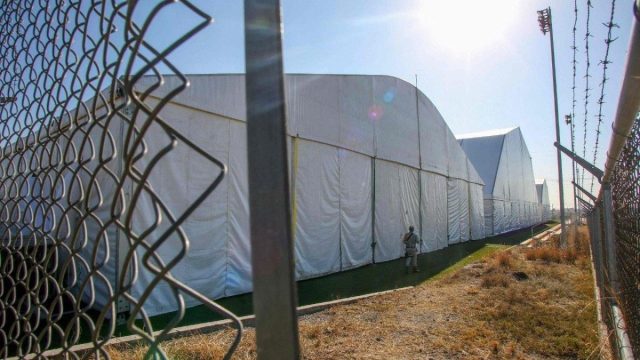
The document calls for the detention of nonviolent immigrants, especially minors and families, to be "strictly limited." It also calls for "all detainees to have effective access to spiritual care and legal counsel, including representation for workers, family members and those who need humanitarian protection."
Archbishop Paul Stagg Coakley, president of the USCCB, wrote directly to Donald Trump to warn him about the growing number of Haitians forcibly repatriated. In his letter, Coakley says "the violence and terror in Haiti have not ceased," and asks: "What good is the immense wealth, prosperity and influence with which we have been blessed as a nation if it is not used in the service of our humanity?"
About 330,000 Haitians relied on Temporary Protected Status, a program created after the 2010 earthquake. For more than a decade, that protection gave stability to families who raised children with American citizenship and put down roots in their communities. The National Association of Evangelicals, along with organizations such as World Relief and many religious leaders, is asking Congress to create a specific legislative pathway for the Haitians affected by the revocation.
Political instability, widespread violence and continuing humanitarian crises in Haiti leave hundreds of thousands of people facing an uncertain future. The association is calling for legislative solutions that prevent deportations and the breakup of families, "above all for the thousands of children with American citizenship who are at risk of being separated."