183 inmates complete the Camino de Santiago in prison ministry's fifth pilgrimage
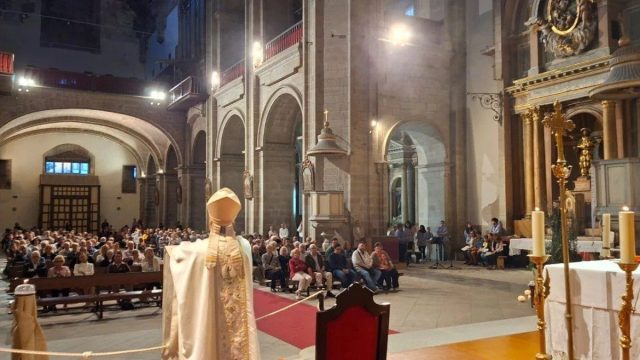
Bishop Florencio Roselló celebrated Mass at Santiago Cathedral on October 3 for 365 pilgrims, among them 183 inmates from 23 Spanish prisons
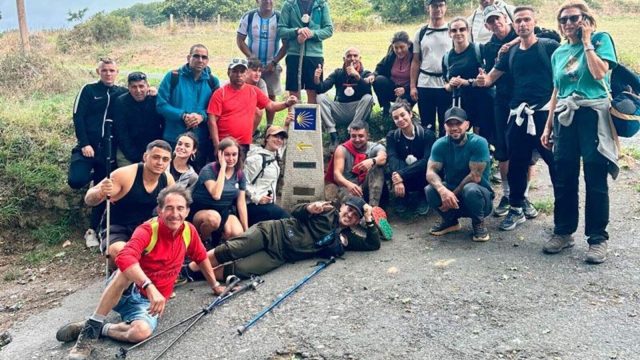
Spain's Catholic prison ministry held the fifth edition of its Camino de Santiago pilgrimage on Saturday, October 3, a day of pilgrimage and reflection that drew 365 participants: 183 inmates from 23 prisons, 73 prison officers and 83 volunteers. The day ended with Mass in the Cathedral of Santiago de Compostela, celebrated by Bishop Florencio Roselló, the bishop responsible for prison ministry at the Spanish Bishops' Conference.
The inmates came from 23 prisons across Spain: A Lama, Bonxe, Burgos, Córdoba, Málaga, Daroca, Teruel, Zuera, Jaén, Mallorca, Monterroso, Murcia, Pamplona, Pereiro, Puerto, San Sebastián, Segovia, Seville, Soto del Real, Teixeiro, A Coruña CIS, Villabona and Navalcarnero. Each group chose its own route: the Sanabrés Way, the Portuguese Way, the Primitive Way or the French Way.
The gathering in Santiago
The groups came together at the auditorium on Monte del Gozo, the hill overlooking Santiago, where Roselló welcomed them at about 10:30 a.m. on Saturday. With him were José María Carod, director of the Department of Prison Ministry, and other prison service officials. From there the pilgrims walked in procession to the cathedral for the 1:15 p.m. Mass.
Three inmates addressed the gathering: a woman from the prison in Zuera, another from Málaga and a man from Gipuzkoa. All three talked about their own experience and what finishing the pilgrimage had meant to them.
A promise for the future
In his homily, Roselló acknowledged the pilgrims' effort and their ability to reach a shared goal together. Above all, he said, they had experienced being "pilgrims like any others", received by the people they met along the way without their past shaping how they were treated. He built his message around a line Pope Leo XIV addressed to inmates during his visit to the Brians prison: "God loves you as you are, but he dreams of you as better."
Roselló urged the inmates to believe those words and to see a promise for the future in them. God still loved them despite their mistakes, he said, and dreamed of them free, happy, with their families and able to walk without fear. He defended the right to start again without being marked forever by the past, appealing to the dignity every person has before God.
That support, the bishop said, is the mission of the prison ministry. He thanked chaplains and volunteers for their presence in the prisons and for the listening and welcome they offer day after day, and he described a Church that draws close to each person to ask: "What can I do for you?"
After the Mass, Roselló thanked the archbishop of Santiago for his hospitality, along with Carod and the whole organizing team. He gave particular thanks to Yolanda Sánchez, head of the prison ministry office in Santiago, and Juan González-Redondo, chaplain at Teixeiro prison, for their work preparing the pilgrimage. After a shared meal, each inmate set off back to his or her own prison.