Attacks on places of worship in Spain rose 59 percent, report says
The Observatory for Religious Freedom and Freedom of Conscience recorded 306 attacks on religious freedom in Spain in 2025, with Catholics targeted in 53 percent of cases and Jews in 13 percent
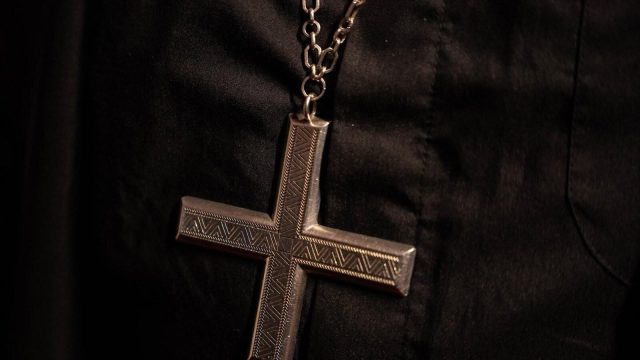
The Observatory for Religious Freedom and Freedom of Conscience (OLRC) has released its annual report on attacks against religious freedom in Spain, counting 306 incidents in 2025, the highest figure it has recorded. The report, published on September 16, 2026, puts the total 26 percent above the 243 cases logged in 2024 and 57 percent above the 195 cases in 2023.
Six of the 306 attacks involved direct physical violence against believers. Catholics were targeted in 53 percent of cases, a share that rises to almost 70 percent when all Christians are counted. The Jewish community, which makes up 0.1 percent of Spain's population, was targeted in 13 percent of cases, or 40 incidents, 13 times as many as in 2022. The report also records 26 attacks against Muslims, 11 against Jehovah's Witnesses and 17 affecting several religious groups.
Attacks on symbols and abuse of believers
Attacks on places of worship and religious symbols rose 59 percent, and abuse directed at believers rose 67 percent. The report records a 12 percent increase in militant secularism and a 7 percent increase in mockery of religion. María García, president of the OLRC, said "almost one in three recorded attacks originates in statements, legislative initiatives, actions or messages issued by political representatives or by political parties."
The parties in Spain's coalition government accounted for most of those incidents. The Socialist Party (PSOE) topped the list with 31 attacks, followed by its coalition partner Sumar with 26. Podemos, which was part of the government in the previous parliamentary term, came third with 18. García said she was concerned that the governing parties bear the most political responsibility, and that this points to a hardening of political rhetoric with direct consequences for the number of attacks.
Institutional response and protection measures
The OLRC seeks meetings with politicians and public officials to raise the problem, though some are not willing to listen. The group's work has had an impact on international bodies such as the Organization for Security and Cooperation in Europe (OSCE), which recently published a guide on hate crimes against Christians.
García said protection against offenses to religious feelings should not be repealed. The governing parties are seeking to do so through proposals to strike Article 525 from the Penal Code. "If mocking religious beliefs already comes at little enough cost, it is going to be a free-for-all," she said.
The OLRC is asking legislators to protect religious symbols and places of worship, to respect the right to pray in public streets and to keep the agreements between religious denominations and the state on education. It also says public institutions should not promote anti-religious hatred.
García said "believers are not second-class citizens" and that people of faith should not hide their beliefs in public life. "A believer is a believer, with everything that entails, 24 hours a day," she said.