
Pope John Paul II condemned 9/11 and warned against a spiral of hatred
A day after the 9/11 attacks, John Paul II told his general audience that the previous day had been "a dark day in the history of humanity." He asked how people could be capable of such cruelty and prayed that the horror would not set off a new spiral of hatred and revenge
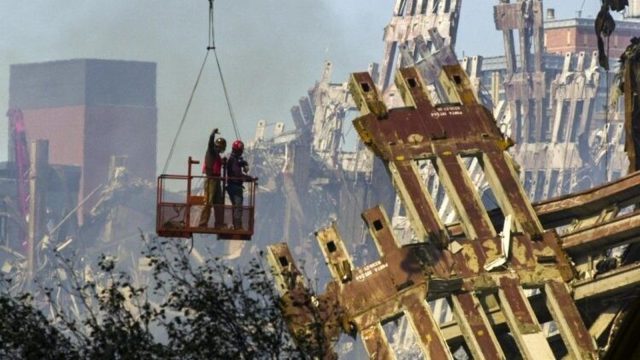
It was Wednesday, September 12, 2001. The day before, the United States had suffered the terrorist attacks that brought down the Twin Towers in New York and struck the Pentagon. Thousands of people had died and the scale of what had happened was still becoming clear when John Paul II opened his general audience by addressing the tragedy directly.
"I cannot begin this audience without expressing my deep sorrow for the terrorist attacks that yesterday brought bloodshed to the United States," the pope said. After offering his condolences to the president and the American people, he acknowledged the shock caused by events of "such unspeakable horror" and joined those who had voiced their "indignant condemnation."
From his first words he also set out a warning that would mark his response to the attacks: "The ways of violence never lead to true solutions for humanity's problems."
"A dark day in the history of humanity"
John Paul II did not play down what had happened. He described September 11 in these terms:
"Yesterday was a dark day in the history of humanity, a terrible affront to human dignity."
The pope said he had followed the events "with intense involvement" from the moment he received the first reports, and that he had offered God an "urgent prayer." Faced with the scale of the evil, he also asked a question that went beyond the attacks themselves.
"How can episodes of such savage cruelty occur?"
His answer looked inward, to the human being. "The human heart is an abyss from which plans of unheard-of atrocity sometimes spring," he said, plans capable of destroying "in a few moments the peaceful and industrious life of a people."
He acknowledged how hard it was to find words. "Every comment seems inadequate," he said. It was precisely there that he pointed to the answer of faith.
"Evil and death do not have the last word"
Where human explanations seemed insufficient, John Paul II said that "faith comes to meet us." For the pope, the Christian response to the horror did not mean denying the existence of evil or minimizing the tragedy of those who had died.
"Even when the darkness seems to prevail, the believer knows that evil and death do not have the last word."
That conviction, he said, was the basis of "Christian hope" and of the confidence he found in prayer in those hours.
The pope then spoke directly to the people of the United States, who were living through an "hour of anguish and bewilderment," and embraced in particular the families of the dead and the injured. That same morning he had celebrated Mass for the victims, whom he commended "to the mercy of the Most High."
He also spoke of those still working in the aftermath of the attacks. He asked God to give courage to the survivors and to sustain the work of the rescue workers and the many volunteers who were devoting "all their energies" to the emergency.
"Innocent suffering" and the limits of words
The suffering of the innocent was a question John Paul II had reflected on at length during his pontificate. In the prayer of the faithful on September 12 he spoke explicitly of those "days of mourning and innocent suffering."
Seventeen years earlier, in the 1984 apostolic letter Salvifici Doloris, he had taken up the question that arises when suffering reaches someone who appears to have done nothing to deserve it. There he acknowledged "so much suffering without guilt" and rejected the idea that all pain could be explained as the result of a fault or as punishment.
"It is not true [...] that all suffering is a consequence of a fault and has the nature of a punishment."
Turning to the biblical figure of Job, John Paul II recognized a limit to human intelligence: "His is the suffering of an innocent man; it must be accepted as a mystery that man cannot fully grasp with his intelligence."
Salvifici Doloris went further, saying that suffering "is always a mystery" and admitting "the insufficiency and inadequacy of our explanations."
John Paul II asked that the response not be revenge
John Paul II also looked ahead to what might come next. The United States had just suffered the largest terrorist attack in its history, and the pope asked that the horror not produce a new chain of violence.
"Let us ask the Lord that the spiral of hatred and violence may not prevail."
The request became more explicit during the prayer of the faithful. He prayed for the leaders of nations, that they "may not let themselves be dominated by hatred and the spirit of revenge" and that they would prevent "weapons of destruction from sowing new hatred and new death."
He also prayed for those who had just lost relatives and friends violently, that their suffering would not lead them to "grief, despair and revenge," but that they would keep faith "in the victory of good over evil, of life over death."
Praying for the injured, he asked that they might become "agents of justice and builders of peace," living "without rancor or feelings of revenge."
One year later: "No philosophy or religion can justify such an aberration"
A year later, on September 11, 2002, John Paul II returned to the attacks. Twelve months had passed, and the pope said he wanted to remember the victims again, express his closeness to their families and "challenge the conscience" of those who had conceived and carried out that "barbaric and cruel plan."
He condemned the attacks again:
"No situation of injustice, no feeling of frustration, no philosophy or religion can justify such an aberration."
John Paul II said the life and dignity of every person were "inviolable goods." "God says so, international law sanctions it, the human conscience proclaims it and civil coexistence demands it," he said.
The pope also described terrorism as incompatible with any real solution to conflicts.
"Terrorism is and always will be a manifestation of inhuman cruelty."
He again rejected violence as a response: "Abuse, armed violence and war are choices that only sow and breed hatred and death." Against them he pointed to two other paths: "Only reason and love are valid means to overcome and resolve conflicts between persons and peoples."
Condemning terrorism without ignoring injustice
Rejecting any justification of terrorism did not mean ignoring the situations of injustice in the world, the pope said.
He called for "a concerted and determined effort" to promote political and economic initiatives capable of resolving "the scandalous situations of injustice and oppression" that continued to affect many members of the human family and that could create conditions for "the uncontrollable explosion of resentment."
"When fundamental rights are violated, it is easy to fall prey to the temptations of hatred and violence."
The response he proposed was for everyone to build together "a global culture of solidarity" capable of giving young people back "hope in the future."
"Only from truth and justice can freedom and peace spring"
On the first anniversary of the attacks, John Paul II set out the foundations on which he believed it was possible to rebuild. He cited Psalm 95, "he will rule the world with justice and the peoples with truth," and then said:
"Only from truth and justice can freedom and peace spring."
On those values, he said, "a life worthy of man" could be built. Without them, "there is only ruin and destruction."
A year earlier he had called September 11 "a dark day in the history of humanity" and had asked that "the spiral of hatred and violence" not prevail. Twelve months later his message pointed in the same direction.
"On this very sad anniversary we raise our prayer to God that love may overcome hatred."
John Paul II's prayer 24 hours after the attacks
The general audience of September 12, 2001 ended with a prayer of the faithful shaped by what had happened the previous day. John Paul II introduced it by acknowledging the "horror of destructive violence" and those "days of mourning and innocent suffering." This was the prayer:
The pope:
Brothers and sisters, with great concern, in the face of the horror of destructive violence, but with the strength of the faith that has always guided our fathers, we turn to the God of Abraham, of Isaac and of Jacob, the salvation of his people, and with the trust of children we beg him to come to our aid in these days of mourning and innocent suffering.
Reader:
1. For the Churches of East and West, and in particular for the Church living in the United States, that, though prostrate with bewilderment and mourning, and drawing inspiration from the Mother of the Lord, the strong woman at the foot of her Son's cross, they may foster in hearts the desire for reconciliation and peace and work to build the civilization of love, let us pray to the Lord.
2. For all who bear the name of Christian, that in the sad events of a humanity full of misunderstanding and hatred they may continue to be witnesses of God's presence in history and of Christ's victory over death, let us pray to the Lord.
3. For the leaders of nations, that they may not let themselves be dominated by hatred and the spirit of revenge, that they may do everything possible to prevent weapons of destruction from sowing new hatred and new death, and that they may strive to light up the darkness of human events with works of peace, let us pray to the Lord.
4. For those who weep and suffer at the violent loss of relatives and friends, that in this hour of suffering they may not be overcome by grief, despair and revenge, but may keep faith in the victory of good over evil, of life over death, and work to build a better world, let us pray to the Lord.
5. For the injured and those suffering because of the senseless acts of terrorism, that they may soon regain their stability and health and, before the gift of life, may foster in their hearts the desire to build, to cooperate and to serve every form of life, without rancor or feelings of revenge, and may become agents of justice and builders of peace, let us pray to the Lord.
6. For the brothers and sisters who met death in the madness of violence, that they may find in the peace of the Lord their sure joy and life without end, and that their death may not be in vain but may become leaven for new times of brotherhood and cooperation among peoples, let us pray to the Lord.
The pope:
Lord Jesus, remember before your Father our brothers and sisters who have died and our brothers and sisters who are suffering. Remember us too, and allow us to pray in your words:
"Pater noster..."
The pope:
Almighty and merciful God, you cannot be understood by those who sow discord, you cannot be accepted by those who love violence: look upon our painful human condition, tried by cruel acts of terror and death, comfort your children and open our hearts to hope, so that our time may still know days of serenity and peace. Through Christ our Lord. Amen.


