Archbishop Argüello rejects Spanish plan to offer medication abortion in health centers
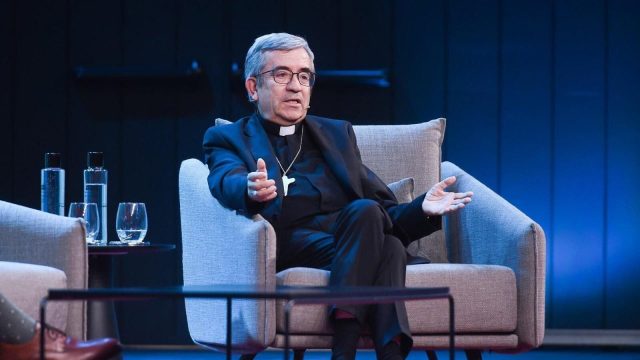
Archbishop Luis Argüello, president of the Spanish Bishops' Conference, said on October 20 that extending medication abortion to primary care clinics changes the procedure but not its result for unborn human life
On October 20, Archbishop Luis Argüello, president of the Spanish Bishops' Conference, Spain's counterpart of the USCCB, and archbishop of Valladolid, rejected the Health Ministry's plan to extend medication abortion to primary care centers. His statement came as the ministry, headed by Mónica García, closed the preliminary public consultation on the proposal. Argüello said changing the procedure does not change what the act does to unborn human life.
"Today is the last day of the consultation on the Health Ministry project (!) that seeks to make medication abortion available in primary care. The method may seem cleaner, but the result is the same: ending the human life being formed in its mother's womb. Yes to life," he wrote on the social media platform X.
Details of the health initiative
García announced the plan on September 28 at an event titled "Abortar sin barreras: del reconocimiento del derecho a la garantía efectiva del acceso" (Abortion without barriers: from recognition of the right to effective guarantee of access), held to mark International Abortion Day. She said the government wants women to choose the method and to be able to obtain it through their health centers, with clear information, trained professionals and support before, during and after. The ministry formally opened the preliminary public consultation on October 1, and it ran until October 20.
The reform requires changes to two existing regulations: Royal Decree 1277/2003, which governs the authorization of health centers, services and facilities, and Royal Decree 831/2010, on quality standards for abortion services. The ministry says the current rules were designed mainly for instrumental or surgical procedures, and that medication abortion in the first weeks of pregnancy does not require complex operating room facilities.
One of the planned changes would explicitly add this abortion procedure to the duties of family planning units, covering its indication, prescription, follow-up and the management of any complications. Those tasks would fall to specialists in obstetrics and gynecology or in family and community medicine. The plan would also set specific care and organizational requirements for accrediting the primary care centers that offer the service.
The proposal also covers mifepristone, one of the drugs used in this type of abortion. The ministry plans to begin the process of amending the drug's product labeling so that it can be used outside hospitals. The drug, approved in France in 1988 to cause the death of the embryo in the first weeks of pregnancy, is administered together with misoprostol.
The plan includes organizational measures so that primary care centers can manage individual conscientious objection by their staff without delaying women's access to the procedure. The ministry says both rights, that of professionals to object and that of women to obtain the service, must be able to coexist without one blocking the other.
Regulatory context and international precedents
According to ministry figures, almost eight out of 10 abortions performed in Spain in 2024 took place in private centers. The measure is part of a broader set of regulatory changes the government is pursuing on abortion, including rules on the information given before the procedure and the composition of clinical committees.
The United States offers a precedent for the possible reach of the measure. The Guttmacher Institute, a private nonprofit organization that supports the legalization of abortion, said in a report that the introduction of medication abortion in the United States in 2000 did not at first lead to a broad increase in its use. Over time it has become the most common method.
Argüello has taken the same position before. In March, at a press breakfast organized by the newspaper La Razón, he said the defense of life from conception is not a matter for believers alone but concerns recognition of the dignity of every human being.