Archbishop Argüello calls housing, Ceuta and abortion three forms of eviction
The archbishop of Valladolid identifies three social crises as forms of expulsion that disregard human dignity: housing, the situation in Ceuta and abortion
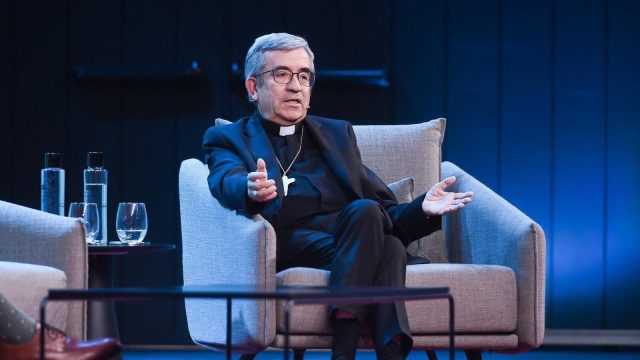
Luis Argüello, archbishop of Valladolid and president of the Spanish Bishops' Conference, has published a statement proposing a single ethical reading of three crises in Spain: housing, the situation in Ceuta and abortion. The text, posted on the diocese's website, describes the three as different kinds of "evictions" that are at the center of public debate and should be addressed on the basis of human dignity and the common good.
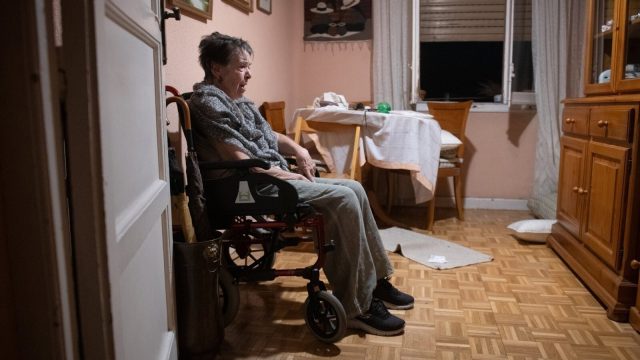
The housing crisis and the Maricarmen case
Argüello begins with housing, which he describes as a problem with many sides. He points to "the shortage of available housing, the closure of many homes for lack of confidence, and the rise in prices and rents." That has produced extreme situations: millions of apartments occupied by a single person and, at the same time, the spread of precarious arrangements such as "rooms rented out without access to a kitchen."
He cites the "Maricarmen case" as a visible symbol of the problem. The elderly woman evicted in Madrid has, in his view, created "an emotional consensus, though not a legal one, about the causes and the solutions." For Argüello, that gap between what people feel and what the law allows points to a disconnect between the legal system and the collective moral conscience.
Argüello places the question in a wider frame: that of a "new social contract" that would be discussed at the meeting between workers, employers and Pope Leo XIV. The housing crisis, he suggests, is not an isolated technical problem but a symptom of a deeper mismatch between the economic, political and moral forces in Spanish society.
Ceuta: the humanitarian crisis and the dignity of migrants
Argüello then turns to Ceuta, the Spanish city on the North African coast. He describes it as a place where residents suffer "an eviction from their normal life and their public spaces." The problem, in his account, is not only about migration: daily life in Ceuta has been disrupted.
He does not confine his analysis to one side. He says migrants, many of whom have been "stripped of their homes in their countries of origin," face "continuous eviction" in the city. Two vulnerable groups meet in Ceuta, according to Argüello: residents whose daily life has been upset, and migrants with nowhere to live.
Argüello says the people of Ceuta, like many Spaniards, are demanding an immediate solution to the illegal occupation of the city. But he warns that this legitimate demand has produced a "humanitarian crisis that affects both migrants and residents."
He calls for "a national agreement that helps the people of Ceuta," along with a "pact at the national and European level that addresses the causes of migration and regulates migration flows," all of it "respecting the dignity of those who arrive."
Abortion as eviction from the womb
The third eviction Argüello identifies is the "eviction from the mother's womb" that takes place through abortion. He describes it as an act with "irreversible consequences" and says the government presents it as a "legal and autonomous right."
Against that, he sets a scientific argument: "science shows that within a pregnant woman there is a distinct human being." On that basis, he argues that "the decision to have an abortion must be considered from a moral perspective," and not only as a legal question or one of reproductive autonomy.
Argüello also rejects framing the debate as a purely religious matter. "The defense of human life is not only a confessional interest, but a question of civilization," he says. He cites Pope Leo XIV's words on "the moral greatness of a nation and its capacity to protect and love the most fragile lives."
The fourth eviction: the exclusion of reason
Argüello closes with a broader observation. Faced with these three evictions, he says, "ethical discussion has become self-interested," giving priority to particular rights without attending to the consequences for the most vulnerable. On housing, "the right of owners to decide" is invoked; on abortion, "the right of pregnant women," but in both cases those who suffer the consequences are forgotten.
In Ceuta the picture is even more complicated. Some proposals for the immediate removal of migrants, Argüello warns, "ignore the law and the fragility of many lives." Others fail to recognize that "many people in Ceuta are also victims of the humanitarian crisis."
There is, then, a fourth eviction implicit in all this: "reason and the will to reach agreement in defense of human dignity appear to have been excluded from public discussion." Argüello criticizes not only the three social crises but also the polarization of the debate around them, which in his view has pushed aside the capacity for calm reflection.
Argüello calls for "calm dialogue and broad agreements," and says the Church has a role in recovering a capacity for ethical reflection that goes beyond partial interests and puts shared human dignity back at the center of public discussion.