New guide pairs spiritual classics with Catholic authors writing in Spanish today
A guide to Catholic books in Spanish sorts titles by spirituality, fiction and ideas, placing Augustine, Chesterton and C. S. Lewis next to novelists and poets publishing today with the Spanish publishers Rialp, Palabra and Ediciones Encuentro
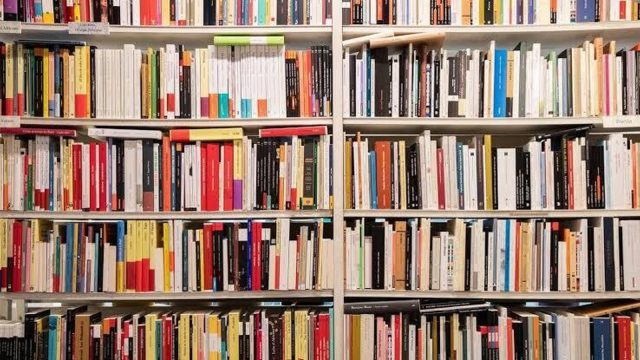
Searches for "libros católicos" or "literatura católica" online usually turn up generic lists or lists drawn from English-language publishing. A new guide sorts the field by reading interest: spirituality, fiction and ideas. It sets the long-standing classics beside authors writing in Spanish today for publishers such as Rialp, Palabra and Ediciones Encuentro.
For readers coming to Catholic publishing in Spanish for the first time, there is a core of titles that rarely changes. The Confessions of St. Augustine, written between 397 and 400, is still regarded as the first Western autobiography. With it come The Imitation of Christ by Thomas à Kempis, Introduction to the Devout Life by St. Francis de Sales, The Book of Her Life by St. Teresa of Jesus and Story of a Soul by St. Thérèse of Lisieux. One more recent title has joined that group and is now a standard reference: Jesus of Nazareth by Benedict XVI, published in three volumes and devoted to Christ's public ministry, from his baptism to the Transfiguration.
Catholic fiction: from the international canon to Spanish authors
In fiction, the international canon turns on a handful of names. The Power and the Glory by Graham Greene, set during the religious persecution in Mexico, and The Diary of a Country Priest by Georges Bernanos appear again and again. In Spain, two classics hold the same place: Cinco horas con Mario by Miguel Delibes and El demonio de media tarde by the priest and writer José Luis Martín Descalzo. Martín Descalzo won the Nadal Prize, a Spanish literary award, in 1956 for La frontera de Dios.
Among living authors writing in Spanish, Juan Manuel de Prada and Pablo d'Ors account for much of the genre's sales. Prada has been called "the most important writer of his generation" following his novel Mil ojos esconde la noche, a portrait of Spaniards in occupied Paris between 1940 and 1944, some of them exiles and some of them officials. D'Ors belongs to a group of novelists who over the past 20 years, along with Jesús Sánchez Adalid, Gustavo Martín Garzo and Álvaro Pombo, have published novels about what it means to be Catholic.
New titles appear every year. Two reached Spanish bookstores in 2025: El buen azar by Enrique Álvarez and Los años decisivos by José Mateos. They arrived alongside recent reissues of the British writer Muriel Spark, three of whose titles were added to the Spanish-language catalog this year: Las voces, La entrometida and El banquete.
Apologetics and ideas: Chesterton and C. S. Lewis
For readers who want argument rather than story, G. K. Chesterton remains the usual way in. Orthodoxy and The Everlasting Man appear on every list as foundational works of Catholic apologetics. His influence reaches writers as different as C. S. Lewis, Mahatma Gandhi and, among contemporary authors, Neil Gaiman. Lewis himself, with The Screwtape Letters, completes the classic pair of literary apologetics.
Ediciones Rialp's catalog includes collections such as the "Biblioteca C. S. Lewis," along with series including the "Biblioteca de Iniciación Teológica" (introductory theology library) and the "Biblioteca de la fe explicada hoy" (the faith explained today), aimed at readers who want to approach theology without starting from scratch. In essays and poetry, living Spanish writers such as Enrique García-Máiquez, Miguel d'Ors and Julio Martínez Mesanza hold prominent places within the Catholic tradition. Critics themselves acknowledge that this sensibility is easier to find today in essays and poetry than in fiction.
Where to find these books
The three main publishers in the Spanish-language Catholic catalog make their titles available through specialized websites and online catalogs. Rialp organizes its collections by subject and posts new titles monthly on its own site. Palabra has a catalog at palabra.es. Ediciones Encuentro previews its monthly releases at letrasdeencuentro.es. Specialized and general bookstores, both physical and online, also distribute these catalogs in Spanish-speaking Latin America.