Spanish bishops call for migrant children to be protected from exclusion
The Church has dedicated the 112th World Day of Migrants and Refugees to migrant children, marking it on September 27 under the theme "Even one of these little ones." The bishops say the unique worth of each child should be recognized rather than measured in statistics
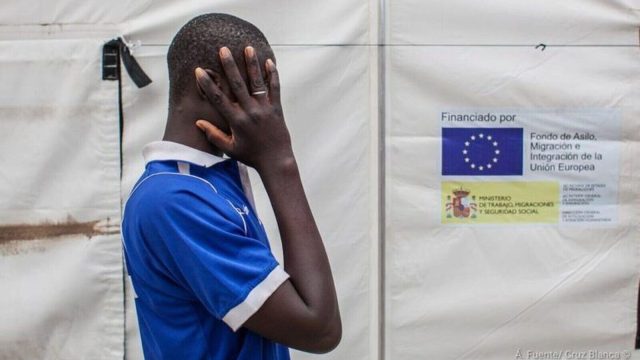
The Catholic Church marks the 112th World Day of Migrants and Refugees on September 27 under the theme "Even one of these little ones," taken from the Gospel of Matthew (18:5). Pope Leo XIV and the Spanish Bishops' Conference have dedicated the day to migrant children, whom the bishops describe as the most vulnerable group among people on the move. They have called for migration to be seen in terms other than figures and percentages, so that the unique dignity of each child is recognized.
The bishops of the conference's Subcommission for Migration and Human Mobility said the theme carries particular weight after the pope's trip to the Canary Islands in June. In their message presenting the day, dated June 30, 2026, they say the phrase "obliges us to stop and change our focus." "A single migrant child, with his story, his fears, his hopes and his wounds, deserves all our attention, all our protection and all our respect," the bishops say, adding that a single life has infinite value.
Breaking with a numerical view of migration
The theme breaks with the prevailing view that measures the importance of migration by numbers: how many arrive, how many stay, how many represent a cost or a benefit. The bishops cite Pope Leo XIV's encyclical Magnifica Humanitas, which says human dignity "belongs to every human being simply by the fact of existing" and "is not acquired, does not have to be earned and does not need to be proven" (MH 52-53).
"Even one" works as a quiet but firm protest against patterns of exclusion that have become normal, the bishops say. They warn that "there are no disposable lives" and that "every migrant, including children, possesses an intrinsic dignity that cannot be ignored or relativized."
From problem to person
The change of perspective the bishops propose is both emotional and ethical. "When we look at a migrant child and recognize him as someone unique, with dreams and abilities, the way we relate to him changes," they say. The child "stops being a problem to be managed and becomes a person to welcome and to meet."
Pope Leo XIV described that change during his homily in the Canary Islands: "When the migrant stops being 'one more,' he stops being a category and a figure. Only then do we understand that this girl could be our daughter, those faces part of our family; and then conscience is left without excuses" (Address at the Arguineguín dock).
Welcome as an encounter with Christ
Welcoming one of these little ones is not an act of generosity or philanthropy but a direct encounter with Christ (Mt 18:5), the bishops say. That understanding changes what welcome means: "It becomes a grace, a gift and a demand that touches the core of our faith." Every migrant child makes present a call that cannot be avoided without consequences for Christian identity.
That spiritual dimension reinforces social and political responsibility rather than excluding it, the bishops say. Recognizing the dignity of each child means working actively to defend their rights.
A structural vulnerability
Many migrant children live in situations of extreme vulnerability, with basic rights at risk: security, education, health and family protection, the bishops say. These are not isolated cases but a structural reality that crosses borders.
Some children undertake dangerous journeys without family protection and are exposed to trafficking networks, exploitation and violence. Others face legal and ideological barriers that make integration difficult. Some remain in overstretched reception systems without adequate support. "Childhood becomes the most vulnerable group among migrants," the bishops say, warning that many carry traumatic experiences that deeply affect their future development.
Three levels of commitment
The bishops call for compassion to be translated into concrete action, just policies and structures that protect and promote the integral development of every child. That commitment should take shape in three areas. Personally, by opening eyes and hearts, questioning prejudice and taking part in volunteer work; in the community, by building welcoming environments where diversity is seen as a richness rather than a threat; and institutionally, by demanding policies that guarantee protection, defense and integration.
Welcome in Spanish parishes
The migration magazine of the Spanish Bishops' Conference carries accounts of reception projects in several Spanish dioceses. In Palencia, the Corredores de Hospitalidad (Hospitality Corridors) project takes in unaccompanied minors who arrived in the Canary Islands, arranging their transfer, adaptation and later entry into work or training. In Zaragoza, the Mesa de lo Social coordinated resources from several organizations to take in two young people enrolled in Transeva, a program for the transition to adult life. In Mondoñedo-Ferrol, a young migrant from Cuba found support in Caritas groups and later worked as a volunteer. The Franciscanos de la Cruz Blanca care for the most vulnerable cases, among them Younes, a boy from Mali with an intellectual disability and diagnosed with HIV, who now lives in a family home and has access to sheltered employment.
Questions for society and the Church
The bishops put a series of questions: "What place do the most vulnerable occupy in our pastoral priorities, in political and economic decisions? How far are we willing to invest resources in their protection and development? What kind of world are we building if we allow children to grow up in conditions of insecurity and exclusion?"
They close by addressing those already working with migrant children in Church organizations: "Thank you, and take heart. Do not grow tired of helping, of welcoming, of caring and of protecting. May they find in you the support they need to mature and to become the adults who, having lived the experience of welcome and encounter, will remake this society."