Priest says seven children died in a month at Nigerian displacement camp
Father Stephen Mesheda, who serves residents of the Wassa camp for displaced people in Abuja, said seven children died from childbirth complications in July and called on Nigeria's government to build basic health facilities there
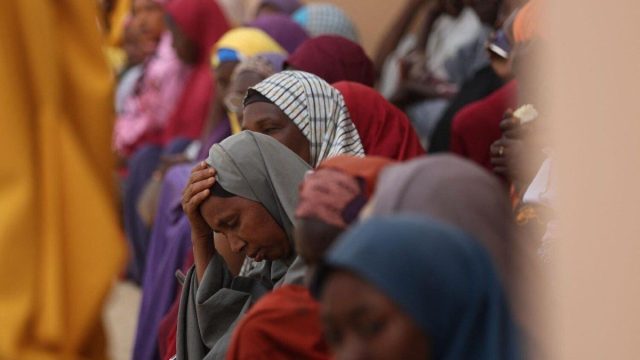
A Catholic priest who serves residents of a camp for internally displaced people (IDP) in Abuja, Nigeria, said seven children died there in a single month from childbirth complications. He called on the government to act urgently to provide basic health care for families at the camp.
Father Stephen Mesheda spoke on October 6, 2026, in an interview with ACI Africa during a free medical outreach day organized by the Daughters of Charity at the Wassa camp.
Mesheda, a priest of the Catholic Archdiocese of Abuja, said the lack of any working health facility leaves residents, especially children and pregnant women, exposed to health risks that could be avoided. "We have been losing many people here. In July alone, we lost seven children due to complications in childbirth. We are begging the government because here we feel helpless," he said.
No health facilities at all
The camp has no hospital and no primary health center, and residents rely almost entirely on private pharmacies for their most basic medical needs. "There is no hospital here. Not even a primary health care center. The only ones we have are maybe private pharmacies," Mesheda said.
He said basic medical care cannot be a privilege for displaced families, and that the government could build health facilities at the camp if it had the political will. "If they want, they can do it, and it is not something beyond their capacity. So we beg the government to act. Let them help us by building hospitals here. They can achieve it in a few days or months," he said.
Mesheda said a hospital or a primary health care center would greatly reduce health problems in the displaced community and prevent deaths that are now avoidable. "My message, I think, must begin with the government, because this is just one group. But the government must not forget the most disadvantaged. They are forgetting us, because here we are completely helpless," he said.
Medical day finds range of illnesses
Sister Mary Eberechi Okoro, coordinator of the Daughters of Charity Hospital in Abuja, said tests during the outreach day detected malaria, hypertension, kidney disease, malnutrition and other conditions among those treated. "We saw that many of the poor have malaria parasites. Malaria is caused by mosquitoes and is more prevalent in damp, waterlogged and dirty areas. Since we are in the rainy season, the mosquitoes are breeding, and most of these people we are serving do not live in proper environments," she said.
Okoro linked several of the cases to the social and economic hardship the patients face. "Many of them do not have adequate housing. They do not have good food," she said. The outreach also found malnutrition and anemia in children and kidney disease in young people. "We saw many children with malnutrition. That means they are not feeding well and they lack blood. All those cases, we are also trying to follow up. Because this free medical outreach will not be able to meet all the demands," she said.
Appeal for help while awaiting a government response
Mesheda asked other groups to keep supporting the camp while residents wait for the government to respond, and said the needs of the IDP community go beyond what a single medical day can cover. "Before the government comes, like the Sisters of Charity now, they have come. Even before the government comes, if there are other groups, we are ready. It would make me very happy," he said.
He thanked the Daughters of Charity for bringing medical services to the camp and said the day brought much-needed relief to children, adults and the elderly. "My people and I are very happy, because this is very rare. It is not that the Sisters of Charity are coming for the first time; they have been coming. So I am not surprised that they are here today. We are very glad," he said.
The outreach day was initially intended to treat about 2,000 disadvantaged people and some 4,000 internally displaced people at the Wassa camp.