Who governs the Church while Pope Leo XIV is in the hospital?
Pope Leo XIV remains at Rome's Gemelli Hospital after surgery to remove the lower lobe of his right lung, with his public engagements suspended until October 20. Canon law and the precedents of earlier popes help explain what happens
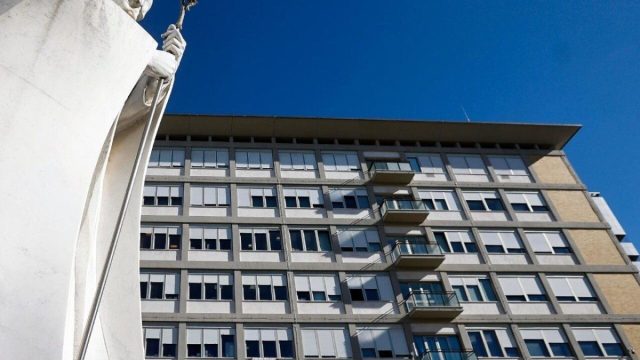
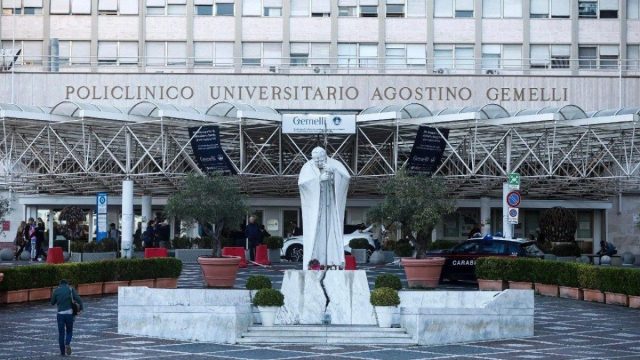
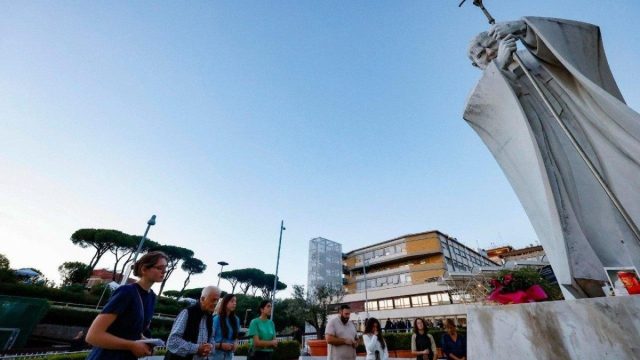
Pope Leo XIV underwent surgery on Tuesday, October 13, at the Gemelli Polyclinic in Rome, and his public engagements have been suspended until October 20. The pope is recovering from surgery in which the lower lobe of his right lung was removed after doctors detected a lung adenocarcinoma.
The Holy See said Wednesday that the operation ended without complications and that the pope had a quiet night. He is recovering well but remains in the hospital under medical supervision.
His absence has already changed the Vatican's schedule. On Wednesday, Cardinal Luis Antonio Tagle presided at the closing Mass in St. Peter's Square for the meeting marking the 10th anniversary of Amoris laetitia, and he delivered a homily prepared by Leo XIV.
The pope himself had assigned the Mass to Tagle before going into the hospital. He has also asked to receive the meeting's final report in person once his recovery is complete, so that he can study it and give his views.
So what happens to the governance of the Church while the pope is in the hospital? Who makes decisions while he recovers? Is there anyone who can stand in for him?
The pope does not lose his authority in the hospital
The Code of Canon Law states that the Roman Pontiff holds supreme authority over the Catholic Church. Canon 331 says the successor of Peter has:
"ordinary power, which is supreme, full, immediate, and universal in the Church, and which he can always freely exercise."
A hospital stay, even a long one, does not by itself transfer any of the pope's powers.
Canon 334 says the pope has collaborators to help him carry out his responsibilities:
"The Cardinal Fathers also help him, as do other persons and various institutes according to the needs of the times."
Those institutions can carry out the tasks entrusted to them, always within their own areas of competence.
Leo XIV's absence from public activity does not mean the Church is without governance, or that his authority has been formally handed to someone else.
The role of the secretary of state and the dicasteries
While the pope recovers, one of the central figures in the day-to-day running of the Holy See is Cardinal Pietro Parolin, the secretary of state.
The apostolic constitution Praedicate Evangelium, issued by Pope Francis in March 2022, sets out the responsibilities of the Roman Curia. Article 44 says:
"The Secretariat of State, as the papal secretariat, closely assists the Roman Pontiff in the exercise of his supreme mission."
Article 46 assigns the Section for General Affairs the task of:
"handling matters concerning the daily service of the Roman Pontiff."
The Secretariat of State coordinates part of the ordinary work of the Holy See, while the dicasteries continue to handle the matters assigned to them.
But Parolin does not automatically take over the pope's functions. No cardinal becomes a stand-in for the pope simply because he is in the hospital.
Decisions reserved to Leo XIV remain his. Other matters can be processed by the competent offices, according to their responsibilities and the faculties they have been given.
What happens if the pope is completely incapacitated?
Canon law also covers a more exceptional situation: the Roman See being entirely impeded.
Canon 335 states:
"When the Roman See is vacant or entirely impeded, nothing is to be innovated in the governance of the universal Church."
The same canon refers to the special laws drawn up for those circumstances.
A hospital stay is not necessarily an impeded see. Suspending audiences or public celebrations does not on its own show that the pope has lost the capacity to make decisions.
Canon law regulates the impediment of a diocesan bishop in more detail, but it does not provide a general mechanism for temporary succession to the pope comparable to the arrangements in some civil governments.
A total and prolonged incapacity of the Roman Pontiff would therefore raise legal questions different from those that arise during an ordinary medical recovery.
Francis governed from the hospital for 38 days
One of the most recent precedents came in 2025, when Francis spent 38 days at the Gemelli Polyclinic with a serious respiratory infection and double pneumonia.
Despite his illness, he continued to make governing decisions.
Vatican News reported on March 27 of that year that he made 44 appointments during his hospitalization, including bishops, archbishops and apostolic nuncios. He also approved administrative measures and decisions concerning the running of the Church.
Parolin later explained how the work had been organized during that period.
In an interview with the Italian newspaper Corriere della Sera, reported by Vatican News on March 29, 2025, the secretary of state said:
"The pope has never stopped governing the Church, not even during the days of his hospitalization at the Gemelli."
Parolin drew a distinction between decisions that required Francis to act personally and ordinary matters that collaborators in the Curia could handle.
John Paul II and celebrations led by other cardinals
St. John Paul II was hospitalized several times during his pontificate, especially in his final years.
In February 2005, while he was at the Gemelli, the then substitute of the Secretariat of State, Archbishop Leonardo Sandri, read out the Angelus message the pope had prepared.
Sandri's reading allowed the prayer to go ahead even though John Paul II could not lead it himself.
The situation resembles Wednesday's Mass celebrated by Tagle, who delivered Leo XIV's homily.
In both cases, the pope's absence from a public event did not mean a substitution in the governance of the Church. Another Church official took part in a celebration the pope could not preside over.
Benedict XVI: when a pope decides to resign for lack of strength
Benedict XVI's case was different, but it is one of the most important precedents for understanding what happens when a pope judges that he can no longer carry out his responsibilities properly.
On February 11, 2013, during a consistory, Benedict XVI announced his decision to resign the Petrine ministry.
In his official declaration he said:
"I have come to the certainty that my strengths, due to an advanced age, are no longer suited to an adequate exercise of the Petrine ministry."
He also said that governing the Church and proclaiming the Gospel require both physical and spiritual strength.
He then announced his decision:
"With full freedom I declare that I renounce the ministry of Bishop of Rome, Successor of Saint Peter."
The resignation took effect on February 28, 2013, at 8 p.m., when the vacant see began and the process of electing his successor opened.
Canon 332, paragraph 2, sets the conditions for a valid papal resignation:
"it is required for validity that the resignation is made freely and properly manifested but not that it is accepted by anyone."
Benedict XVI's decision did not follow a hospitalization or a declaration of total incapacity. It was a voluntary resignation, formally declared, that ended his pontificate.
Could Leo XIV delegate some of his functions?
Church law allows certain tasks to be carried out by the pope's collaborators, provided they have the authority to do so.
The Roman Curia is organized so that many matters can be settled without the pope personally intervening in each step.
In March 2025, Parolin said some matters could be handled independently by the dicasteries, under the faculties they had received, while others had to be reserved to the pope's decision.
In Leo XIV's case, decisions have already been made about reorganizing his schedule. Assigning Wednesday's Mass to Tagle and his decision to examine the final Amoris laetitia report himself show how activities can be adapted during his recovery.
No general transfer of his powers has been announced, and there has been no declaration that the Roman See is impeded.
Church activity continues while Leo XIV recovers
The surgery has forced changes to the pope's schedule, but it has not changed the formal structure of Church governance.
The Secretariat of State and the dicasteries keep their responsibilities, and decisions reserved to the pope remain his.
The historical precedents point to three different situations: a pope who governs during a hospital stay, as Francis did; a pope who entrusts particular celebrations to other officials, as John Paul II did; and a voluntary resignation, as with Benedict XVI.
For now, Leo XIV remains at the Gemelli, recovering from lung surgery. His medical situation requires his activities to be adapted, but being in the hospital does not mean he stops being pope or automatically loses authority over the Church.