
Vatican denies 1,500 pilgrims entry to St. Peter's for group prayer
The Holy See refused about 1,500 pilgrims access to St. Peter's Basilica to pray together at the Apostle's tomb on October 24, during the annual Ad Petri Sedem Summorum Pontificum pilgrimage. It gave no reason and did not tell them until the day before
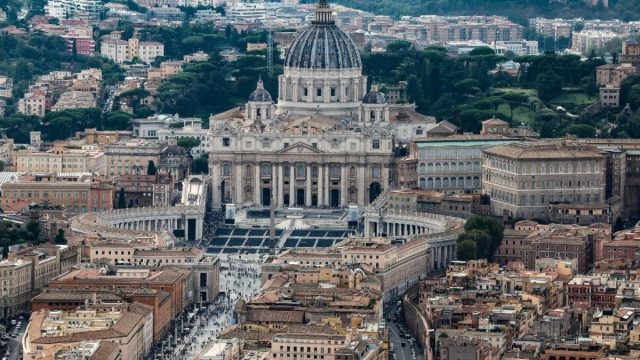
The Holy See refused about 1,500 Catholic pilgrims entry to St. Peter's Basilica on Saturday, October 24, to pray together at the tomb of the Apostle during the annual Ad Petri Sedem Summorum Pontificum pilgrimage. The refusal was signed by Archbishop Paolo Rudelli, substitute for General Affairs at the Secretariat of State, and gave no explanation. The pilgrims were not told until Friday afternoon, just a day before the event.
The pilgrimage, in its 15th year, is organized by the Coetus Internationalis Summorum Pontificum, an association of 33 Catholic organizations around the world committed to defending the traditional liturgy. Its name comes from the motu proprio Summorum Pontificum, issued in 2007 by Pope Benedict XVI, which allowed all priests to use the liturgy that preceded the reform of the Second Vatican Council. The pilgrimage began in 2012 and is largely a lay initiative, though priests and religious also take part. Its motto is cum Petro et sub Petro, an expression of fidelity to the pope and to the Catholic Church.
The refusals began months before the pilgrimage weekend. At a private audience on December 18 of the previous year, Bishop Athanasius Schneider personally handed Pope Leo XIV a request from the Coetus to celebrate a pontifical Mass at the Altar of the Chair of St. Peter. The Secretariat of State did not reply until August 7, about eight months later, when it denied the use of the space on the grounds that it was unavailable. It offered no alternative date and no further explanation.
After that first refusal, the organizers assumed that some form of group devotion inside the basilica would still be possible, as had been the case in 2023 and 2024, when the Mass was also refused. On September 8, Father Claude Barthe, the pilgrimage chaplain, wrote to the Secretariat of State to ask whether the pilgrims could enter in procession on October 24, pray for the pope at the Altar of the Confession and adore the Blessed Sacrament. The basilica's sacristy had confirmed that the proposed time, 1 p.m., was workable if the Secretariat of State gave its authorization.
Rudelli turned down the request in a letter dated September 30 without giving a reason. The letter was sent by ordinary mail to the Apostolic Nunciature in Paris and did not reach Barthe until October 12, less than two weeks before the pilgrimage. Rudelli did not deny that the basilica was free on the date requested, and he offered no explanation for the refusal.
Christian Marquant, the pilgrimage's main organizer, said in a statement on October 25 that those running the event decided not to make the news public straight away because they were trying to "obtain permission for the group to enter St. Peter's Basilica, given the importance of that gesture and the scandal it would have caused for the pilgrims, and for Catholics in general, to be denied entry during a pilgrimage." When those efforts failed, the pilgrims were told on Friday afternoon. Vatican security stopped the march at the Vatican obelisk.
Joseph Shaw and Monika Rheinschmitt, president and treasurer of Una Voce International (FIUV), one of the associations in the Coetus, said that "at that point it was hoped and assumed that it would still be possible to have some kind of collective devotion for the pilgrims in St. Peter's Basilica, as had happened in 2023 and 2024." They added that "the August letter did not rule out that possibility, which is why the Coetus made the request."
Unnamed Vatican sources quoted by the news site The Pillar gave a different account. According to those sources, the refusal covered only entry in procession, and the pilgrims could have gathered inside the basilica had the organizers submitted a more specific request. Marquant denied that any alternative date for the Mass had been offered. Other outlets also checked that with the organizers.
After the refusal of the Mass at St. Peter's, some traditionalist outlets said that the celebration led the previous year by Cardinal Raymond Leo Burke had been seen in the pope's circle as "inappropriately triumphalist," and that this had been decisive in the decision not to grant authorization this time.
The calendar became a further point of dispute. In late September the Holy See announced that it would hold a Lectio Francisci at the Altar of the Chair on that same October 24, marking the 800th anniversary of the death of St. Francis of Assisi. The Holy See never mentioned that event in any of its correspondence with the Coetus, and it was announced nine months after the pilgrims submitted their request for the Mass. The Lectio Francisci was scheduled for the afternoon of October 24, while the pontifical Mass would have taken place in the morning, and the sacristy had confirmed that the altar would be free at 1 p.m. for the prayer that was requested.
Unable to hold anything at St. Peter's, the organizers obtained authorization for a prelatial Mass at the Basilica of Santa Maria Maggiore in Rome, set for 3 p.m. on Saturday. Shaw and Rheinschmitt noted the "privilege" of being able to celebrate the Mass there on a Saturday, something "not normally permitted to groups of pilgrims." Schneider celebrated the Mass and offered it for the repose of the soul of Pope Francis. In his homily he urged those with responsibilities in the Church to promote the "longed-for liturgical peace" that would "restore the full use, without discrimination, of the traditional form of the Roman Rite."
The doctrinal background to the dispute is the motu proprio Traditionis custodes, issued by Pope Francis in 2021, which revoked Benedict XVI's Summorum Pontificum and imposed severe restrictions on the traditional liturgy, also known as the usus antiquior or the Tridentine Mass. Francis, who died in 2025 and who restricted the liturgy the pilgrims defend, is buried at Santa Maria Maggiore at his own request.


