
Salvadoran bishops present Pope Leo XIV with a relic of St. Óscar Romero
Cardinal Gregorio Rosa Chávez said Pope Leo XIV's encyclical on human dignity speaks to the challenges facing El Salvador
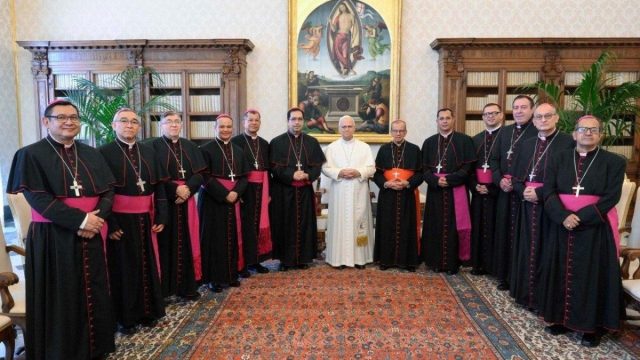
Pope Leo XIV received the bishops of El Salvador in a private audience on September 11, closing their ad limina Apostolorum visit, which began in Rome on September 7. During the meeting the Salvadoran bishops presented the pope with a first-class relic of St. Óscar Arnulfo Romero, the martyred archbishop of San Salvador.
Cardinal Gregorio Rosa Chávez, auxiliary bishop emeritus of San Salvador, described the experience to Vatican News as "very intense, very inspiring, very stimulating, very warm." He said the meetings with the Roman dicasteries throughout the visit had been marked by fraternal dialogue and affection for the Church in El Salvador.
El Salvador's challenges and the dignity of the person
Rosa Chávez said the bishops brought to Rome the main challenges facing El Salvador, and that they set out the country's situation starting from the dignity of the person. He referred to Pope Leo XIV's encyclical Magnifica humanitas, which focuses on safeguarding the human person in the age of artificial intelligence. "We have read his encyclical, which is a wonderful document," the cardinal said, pointing to the pope's insistence on placing the human being at the center of social concerns.
Rosa Chávez said the pope "knows our land incredibly well."
The Salvadoran Church: love, suffering and hope
Rosa Chávez described the "DNA" of the Church in El Salvador as a community full of love for the pope, the Virgin and the Eucharist, despite the sufferings of its people. "We are delighted to be able to live this moment, which is so great for our people, who need a word of hope from him," he said.
Romero's legacy as an inspiration for encounter and dialogue
On St. Óscar Arnulfo Romero, the cardinal said his significance extends beyond El Salvador to the whole Church. "He is certainly a saint of the whole Church. Here in Rome he is loved so much," he said, noting the affection for the martyred archbishop in various offices of the Roman Curia. Romero's legacy remains a source of inspiration, Rosa Chávez said, and he voiced his hope for a culture of encounter and dialogue in which Salvadorans feel they are the protagonists of a shared future.
Magnifica humanitas read as a message of hope
Rosa Chávez spoke at length about the encyclical. "Once, over two days, word by word, I was amazed at how it communicates hope," he said. The pope insists on placing the human being at the center of reflection, the cardinal said, which he considers essential to building a better future in which dignity is respected in the face of dehumanizing forces.
A closing message of hope
Rosa Chávez ended with a message for Salvadorans: "May hope not fade. May we keep waiting in hope and dreaming of the future that God wants." He recalled a phrase of John Paul II that is still heard in the Salvadoran Church, "El Salvador will save the world," which he read as a call to the country's evangelizing mission. "That way of ours of being a light and a hope for the world inspires us to be truly evangelizers, as God wants us to be," he said.


