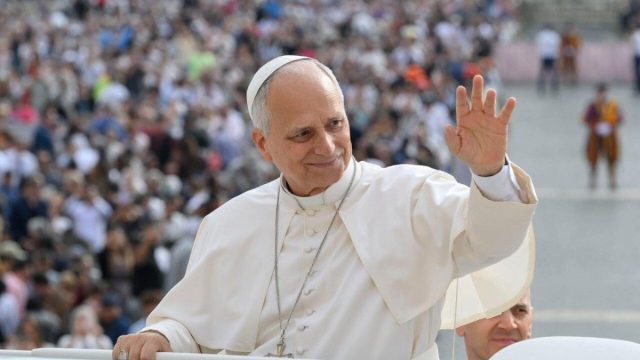
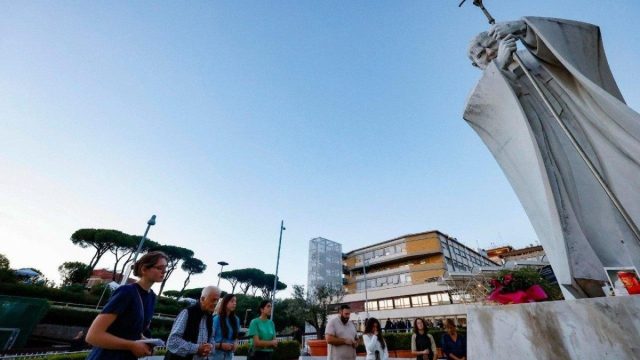
Pope Leo XIV undergoes surgery at Rome's Gemelli hospital to remove lung nodule
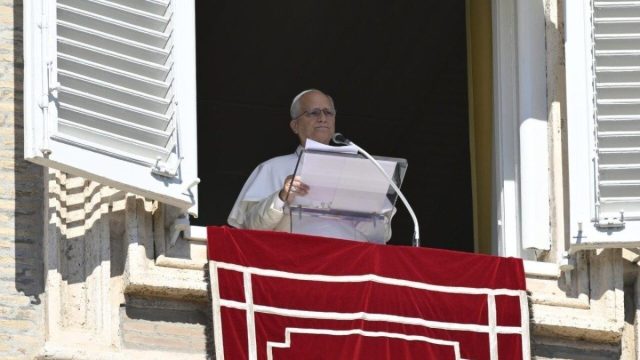
The 71-year-old pope announced the operation himself at the Angelus on Sunday, October 11. The nodule was found at a very early stage during a routine medical checkup
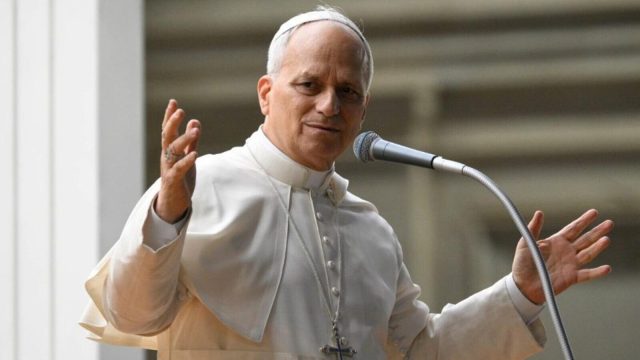
Pope Leo XIV, 71, is undergoing surgery today at the Gemelli Polyclinic in Rome to remove a lung nodule found during a routine medical checkup. The pope announced the operation himself at the Angelus on Sunday, October 11, and asked the faithful to pray for him.
Doctors expect the pope to remain in the hospital for about a week, though his recovery time will depend on how he responds. The Holy See has not said whether the nodule is benign or malignant. That will be known after a pathologist examines the removed tissue.
A lung nodule is a small lesion or mass of abnormal tissue inside the lung, usually less than three centimeters (about 1.2 inches) across. Most are benign and can be linked to old infections, lung scarring or inflammation, though some may be malignant tumors in their early stages.
Not every lung nodule needs surgery. When a nodule looks benign and remains stable, doctors may simply monitor it with periodic imaging tests. When there is doubt about what it is, or when it keeps growing, surgery may be recommended. An operation removes the lesion and allows the tissue to be examined afterward in a pathology laboratory to determine more precisely whether it is benign or malignant. The Holy See has not detailed the specific clinical reasons behind the decision to operate on the pope.
Techniques and procedure
The operation removes the nodule and, when necessary, a small portion of the surrounding lung tissue. One of the techniques used is video-assisted thoracic surgery, known as VATS, which allows surgeons to reach the lung through small incisions between the ribs. Surgeons insert a camera and instruments and operate without opening the chest widely.
There are several surgical options. A wedge resection removes a small piece of lung containing the nodule; a segmentectomy removes a lung segment; a lobectomy removes one of the lobes of the organ. In other cases surgeons may perform a thoracotomy, an open operation that gives direct access through a larger incision. The Holy See has not said which technique the doctors will use, so the exact extent of the surgery is not known.
Recovery
The Associated Press reported that the pope is in good health and in good physical condition for the recovery ahead. Doctors expect a hospital stay of about a week, during which the medical team will monitor his breathing, pain control and healing. In some operations surgeons place a chest drain temporarily to remove accumulated air or fluid.
After lung surgery, patients may need several weeks to recover fully, depending on the technique used and their progress. Breathing exercises and gradual movement may also be recommended to prevent complications. After minimally invasive operations, some patients are discharged within a few days and continue recovering at home.
What the diagnosis could mean
If the pathology report confirms the nodule is benign, no further treatment may be needed beyond whatever follow-up checks doctors consider appropriate. If it is malignant, specialists will have to study the type of tumor, how far it has spread and other features to decide the next steps.
When lung cancer is found at an early stage and is localized, surgery can cure some patients. Dr. Stephen Liu, a lung cancer specialist at the Lombardi Comprehensive Cancer Center at Georgetown University, told the Associated Press that when a cancerous lesion is found and removed early, the outlook can be excellent. In some cases, he said, surgery alone is enough.
Changes to the pope's schedule
The surgery has forced changes to several commitments this week. Among them is the Mass on Wednesday, October 14, tied to the meeting marking the 10th anniversary of Amoris Laetitia. Cardinal Luis Antonio Tagle will preside instead of Leo XIV. The pope has said he wants to read and review the meeting's conclusions himself once he leaves the hospital.
He is also scheduled to make an apostolic trip to Uruguay, Argentina and Peru from November 6 to 17. There has been no confirmation so far that the operation will change those plans, though the trip will depend on how the pope's health progresses. While he is in the hospital, Leo XIV remains the highest authority in the Catholic Church. Canon law provides no specific mechanism for automatically replacing a pope who is temporarily incapacitated for medical reasons.
Reaction and prayers
News of the operation has drawn messages of support from many countries. Bishops' conferences, religious communities and the faithful have organized prayers for his recovery, including in Peru, Argentina and the Diocese of Chiclayo in northern Peru, which Leo XIV led before his election as pope. Announcing the surgery, the pope thanked people for their expressions of affection and closed his message with a request to the faithful: "I entrust myself to your prayers!"