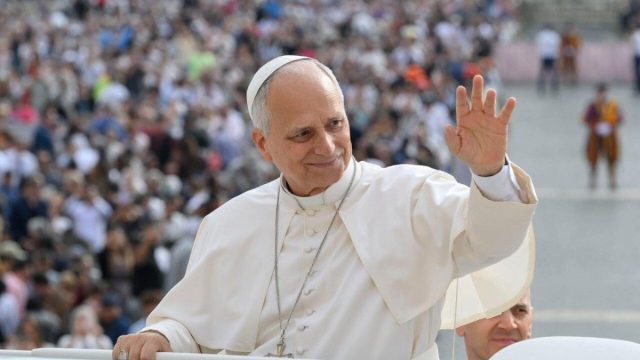
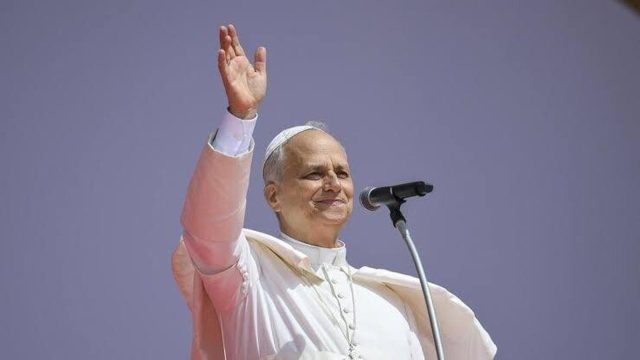
Pope Leo XIV recovering after surgery for early-stage lung cancer in Rome
The Vatican said surgeons removed the lower lobe of Pope Leo XIV's right lung on October 13 at Rome's Gemelli hospital after a routine checkup found a small nodule later confirmed as a lung adenocarcinoma
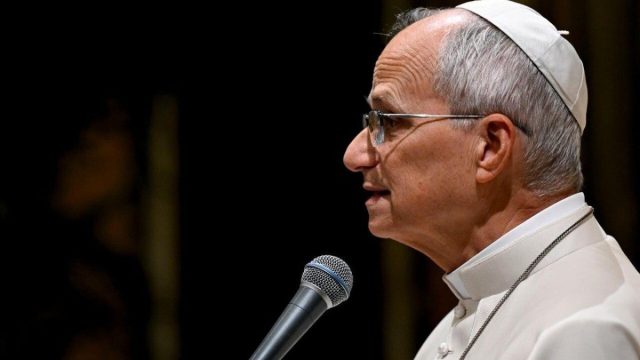
Pope Leo XIV, 71, underwent surgery on Tuesday, October 13, at the Agostino Gemelli University Polyclinic in Rome. The Holy See's medical bulletin said that "to ensure that the procedure was radical, the lower lobe of the right lung was removed using a video-assisted technique," and that the histological examination carried out in the operating room itself confirmed a lung adenocarcinoma. On Thursday, Vatican News reported that the pope had spent another quiet night in the hospital and that his recovery so far has been free of complications.
Adenocarcinoma is the most common subtype of non-small cell lung cancer. It begins in the mucus-producing glandular cells of lung tissue. In the pope's case it appeared as a nodule of less than three centimeters (about one inch), according to Argentine pulmonologist Ana María Putruele, who stressed how small the lesion was. Leo XIV himself had said in St. Peter's Square that the nodule was found "at a very early stage and well localized" during a routine medical checkup, with no symptoms pointing to illness.
The surgical technique and what it means
The operation was a lobectomy: complete removal of the lower lobe of the right lung along with the lymph nodes in the area. The procedure ensures that no suspicious tissue is left behind and allows doctors to check whether the tumor has spread. Thoracic surgeon Lorenzo Spaggiari said that "if all those lymph nodes turn out to be negative, that is, stage one, then the prognosis is very good," and no further treatment would be needed. He put the mortality risk of this type of surgery in patients in good general health at between 0.6 percent and 0.8 percent.
Surgeons used video-assisted thoracoscopic surgery (VATS), which relies on small incisions rather than an open thoracotomy. Surgeon Diego González Rivas said that with this approach, if the pope "has prior lung capacity, he probably won't notice it," and that he will recover quickly. The surgical team of 10 people was led by Stefano Margaritora, head of thoracic surgery at the Gemelli.
What specialists say about the chances of a cure
Even before the diagnosis was confirmed, several specialists agreed that if the nodule proved malignant, the outlook would be favorable because it had been caught in time. Professor Federico Venuta said that "for a person in good general health, the prognosis for a lung cancer detected at such an early stage is absolutely favorable." Pulmonologist Triplette told CNN that in the earliest stages of non-small cell lung cancer, "five-year disease-free survival" is "above 80 percent." Peer-reviewed medical literature reports similar numbers: a Spanish screening study recorded 90 percent survival at five years for tumors found at stage I, the earliest stage.
These figures are not a personal prognosis for the pope, and no such prognosis has been made public. Specialist Lopes said that if an early stage with no lymph node involvement is confirmed, "with the surgery the pope would be cured," with "an eighty, ninety percent probability that his cancer never comes back," though he said this was a general estimate and not a confirmed finding about the pope's specific case.
The analysis carried out during the operation confirmed the type of tumor, but the full pathology report, which establishes the exact size, the resection margins and any involvement of the nodes that were removed, takes several more days. That result will determine whether Leo XIV needs chemotherapy, radiation or no further treatment. The Vatican and the doctors have not released that information, an official stage, or a personalized survival estimate.
What it means for the pope's schedule
The Holy See canceled all of the pope's audiences until October 20 and initially estimated a week in the hospital. Thoracic surgeon Marco Scarci said that although the operation "is not particularly risky," the pope "could take up to three months to regain the level of physical fitness he had before the operation," though that does not mean complete inactivity during that period.
The date drawing the most attention is the apostolic trip to Uruguay, Argentina and Peru, scheduled for November 6 to 17. The European Institute of Oncology in Milan recommends not flying for three weeks after this type of surgery, a period that coincides with the scheduled departure date, "depending on his recovery." On the Sunday before the operation, the pope suggested that the trip was still on. The Vatican has not confirmed or denied it officially since the surgery. The final decision will depend on how his recovery progresses in the coming weeks.