Pope Leo XIV's surgeon sees no medical obstacle to Latin America trip
Stefano Margaritora, the thoracic surgeon who removed a lung tumor from Pope Leo XIV, said there is no clinical reason the pope cannot travel to Uruguay, Argentina and Peru from November 6 to 17
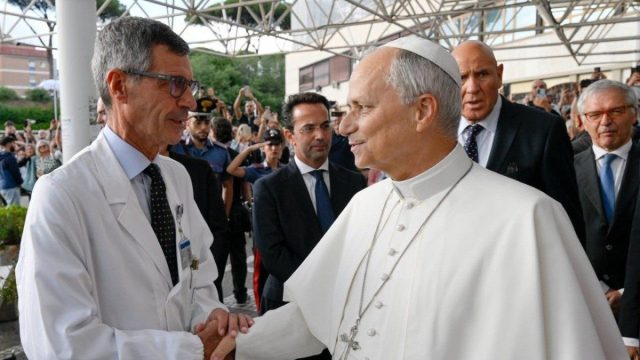
Stefano Margaritora, the surgeon who operated on Pope Leo XIV, has ruled out any medical impediment to the pope's apostolic trip to Latin America, scheduled for November 6 to 17. Margaritora heads the thoracic surgery unit at the Gemelli Polyclinic Foundation in Rome. "I would say there are no clinical reasons why this trip cannot take place," he said in an interview with Vatican News on October 17.
When he was discharged from the hospital, Leo XIV was in "absolutely satisfactory" clinical condition, with completely normal blood tests and normal heart function, Margaritora said. The lung that had been operated on was re-expanding within the usual time frame for this kind of procedure. He estimated that full physical recovery after the operation takes about two weeks. Almost a week had passed since the surgery at the time of the interview, so the pope could be fully fit in about 10 more days, leaving enough time before his scheduled departure.
The details of the three-country trip
The trip takes in three countries, Uruguay, Argentina and Peru, and involves 14 flights and two helicopter legs, with sharp changes in altitude and climate. In Peru, the pope's adopted homeland, the schedule includes Cusco, at 3,500 meters (11,500 feet) above sea level, and Pucallpa, in the Amazon rainforest. The Peruvian leg runs from November 11 to 16. In Argentina, the pope will stay a little more than three days.
The tumor found by chance
Margaritora said the adenocarcinoma was found entirely by chance. During routine imaging focused on the abdomen, doctors spotted a small shadow in the lower part of the chest that turned out to be the tumor. He said this happens fairly often, because the diaphragm allows the base of the lungs to be seen in that kind of scan. Had the lesion been located slightly higher, he said, it would have gone unnoticed.
Leo XIV had no breathing problems and no symptoms pointing to a lung condition. He felt perfectly well. Margaritora used the interview to argue for regular preventive checkups, especially for people at risk. Unlike breast or colon cancer, which have mass screening programs, lung cancer has no such systematic follow-up, and it produces no symptoms in its early stages.
"The pope's case illustrates how an early diagnosis can come by completely unexpected routes: an accidental fall, a checkup for another reason or, as in this case, an ordinary abdominal scan," Margaritora said.
A technically routine operation
Margaritora rejected any dramatization of the surgery itself. "I would not be honest if I said it was very complicated so as to claim heroic feats for myself," he said. He called the procedure routine in the sense that standard practice for a lung tumor of a certain size is to remove the entire lobe containing it. In Leo XIV's case that was the lower lobe of the right lung. The operation lasted three hours and went without any complication.
The pope's attitude during recovery
Margaritora gave a very positive account of the recovery after surgery. He described the pope as a patient who threw himself into it with unusual determination, following the diet and physiotherapy instructions from the medical team to the letter and at times going beyond what was asked of him. On the second day after the operation, staff found Leo XIV setting out the chairs in the chapel himself. Told that this was not necessary, the pope replied: "It doesn't matter, I can do it, I'll do it."
The pope was calm and friendly throughout and rarely complained, Margaritora said, despite the pain that inevitably follows this kind of surgery.
The emotional side of the experience
The surgeon also described the personal side of the experience. Before the anesthesia began, when Leo XIV entered the operating room and found the team standing in a semicircle, Margaritora told him: "Holy Father, this is our dream team." The pope smiled.
Margaritora said he felt an inner tension during the procedure. He needed to approach it with the same normality as the more than a thousand similar operations he has performed, while knowing that he was operating, for the first time in modern history, on a pope with a malignant tumor. "Having operated on a pope has been a private emotion that I cannot even describe," he said.