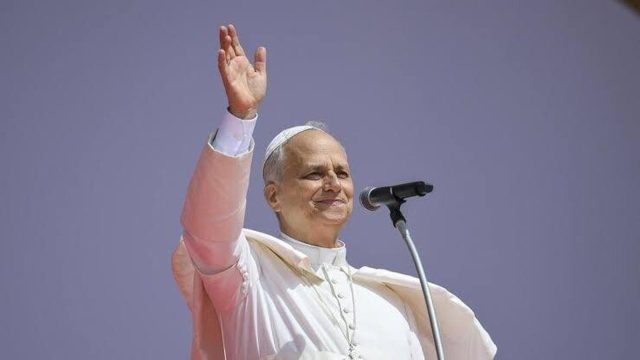
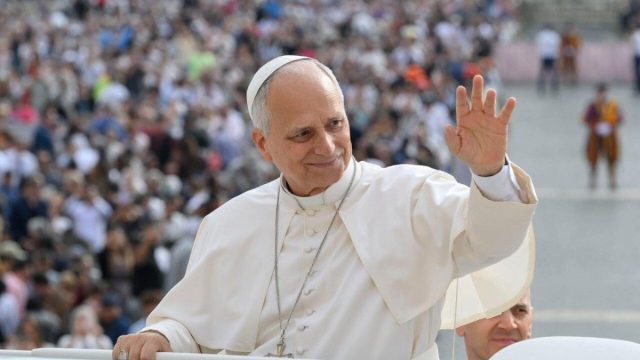
Pope Leo XIV resumes work at Rome's Gemelli hospital two days after cancer surgery
The 71-year-old pope walked unaided, returned to his normal diet and received a senior Vatican official on Thursday. Doctors are awaiting further tests, leaving his November trip to Peru, Uruguay and Argentina in doubt
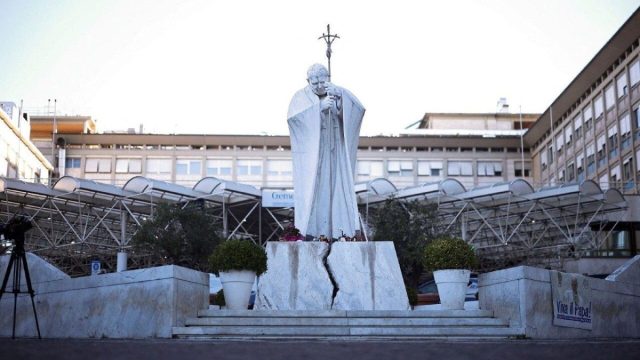
Pope Leo XIV, 71, began walking unaided, returned to his normal diet and resumed some official duties from his room at the Gemelli hospital in Rome on Thursday, October 15. The surgery two days earlier removed the lower lobe of his right lung, where doctors confirmed an adenocarcinoma, the most common type of lung cancer. The Vatican said his recovery after the operation is going as expected. Questions remain about the true extent of the disease and whether the pope will be able to make his pastoral visit to Peru, Uruguay and Argentina, scheduled for November 6 to 17.
Medical team and first positive signs
The team treating the pope, led by his personal physician, Dr. Luigi Carbone, and by the head of thoracic surgery at the Gemelli, Professor Stefano Margaritora, said lab tests taken after the operation and a chest X-ray produced results within the range expected for this kind of surgery. Imaging also showed that the operated lung was recovering well.
Leo XIV received respiratory physiotherapy, did mobility exercises and moved around his room on his own. He also returned to his usual meals, including breakfast and lunch. Vatican spokesman Matteo Bruni said the pope celebrated Mass for the second day in a row with other priests in a chapel set up near his room on the hospital's 10th floor.
The Vatican had said earlier that the pope slept well, got up and had breakfast. Shortly after 4 p.m. Thursday, the Holy See Press Office confirmed that he had taken up part of his duties again. Leo XIV received Archbishop Paolo Rudelli in his room. Rudelli is Substitute for General Affairs of the Secretariat of State, the third-ranking post in the Vatican, a post that oversees much of the Holy See's day-to-day administration.
Medical questions still open
The favorable results after surgery do not amount to a full assessment of the disease. Doctors are waiting for further tests to determine the precise molecular characteristics of the tumor, to establish whether the disease has spread beyond the tissue that was removed, and to judge whether any additional treatment will be needed. Those findings will shape the pope's long-term prognosis and his recovery needs.
The operation on Tuesday, October 13, was more extensive than first planned. Instead of removing only the suspicious nodule detected earlier, the surgeons had to resect the entire lower lobe of the right lung. That change has altered the expected recovery timeline and left the planned South American trip in doubt.
South America trip in doubt
Leo XIV asked for prayers for the pastoral visit to Peru on the Sunday before the operation. Peruvian President Keiko Fujimori has suggested the trip could be postponed, and much of the Argentine press has openly questioned whether the pope could safely undertake an international trip of that scale so soon after surgery. A source at the Apostolic Nunciature in Buenos Aires said circumstances had changed significantly: the trip looked feasible when the planned operation was limited to removing the nodule, but the removal of a lung lobe changes the expected recovery period. No final change to the itinerary was announced Thursday.
Amoris Laetitia summit ends
As the pope's recovery continued, the Vatican closed a Church summit called to mark the 10th anniversary of Pope Francis's apostolic exhortation Amoris Laetitia. The meeting ended on the afternoon of October 14 in the Paul VI Hall with prayers for Leo XIV's recovery. Over eight days, from October 7 to 14, it brought together the presidents of the world's bishops' conferences and the heads of the Eastern Catholic Churches, along with experts and laypeople, 187 participants in all.
Leo XIV attended only the first day, October 7, when he opened the proceedings by asking participants to pay particular attention to fragility and to reflect on how to accompany situations marked by limits, wounds and apparent failures. In his opening address he stressed the continuity of the Church's teaching on marriage and the family, and said a growing distance has emerged between the ways sexuality is lived and the Christian vision of marriage.
Summit report awaits the pope's review
The summit's final synthesis report will not be made public. At Leo XIV's own request, made before he went into surgery, the document will remain confidential until he has been able to read it and comment on it. Jesuit Father Giacomo Costa, a consultor to the General Secretariat of the Synod and one of the meeting's organizers, said Leo XIV "wanted to hear it and to be able to offer his own word on it."
Cardinal Kevin Farrell, prefect of the Dicastery for Laity, Family and Life, and Cardinal Mario Grech, secretary general of the Synod of Bishops, issued a joint statement. They said they would present the report and the relevant texts to the pope after his convalescence. "We will then proceed according to his instructions," the two cardinals said.
Leo XIV could not preside at the closing Mass on October 14 as planned, and the homily he had prepared was read by Cardinal Luis Tagle. In it, the pope recalled the Lord's love, saying it "is the love that Amoris Laetitia invites us to make the foundation of our families," and he asked Catholics to teach young people the importance of the virtues, especially chastity. In a short message signed on the day of his operation and read to participants on October 14, the pope wrote: "I will read the fruits of your work and your discussions, and I will offer my reflections in due time."