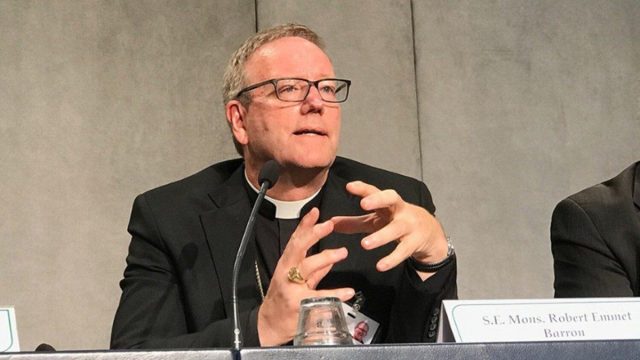
Pope Leo XIV names 30 theologians to Vatican commission, drawing conservative criticism
The pope appointed 30 members to the International Theological Commission for 2026-2031, with a mandate on Tradition and inculturation, while the Spanish site InfoVaticana questioned the positions of at least four appointees
On October 19, 2026, Pope Leo XIV appointed 30 theologians as members of the International Theological Commission for the 2026-2031 term. Twenty-four are joining the body for the first time, and six are being reappointed after serving in the 2021-2026 term. The appointees were chosen from a list submitted by Cardinal Víctor Manuel Fernández, prefect of the Dicastery for the Doctrine of the Faith, who presides over the commission.
The new commission has two more members than the previous one, widens representation from Asia, Africa and South America, and includes more lay people and women. The new group is made up of 16 priests, one religious sister and seven lay people. The new members include the Argentine priests Fabricio Leonel Forcat and Jorge Alejandro Scampini, both professors in the theology faculty of the Pontifical Catholic University of Argentina. Six women theologians are among the new appointees, bringing the total number of women in the body to eight. Lay members also total eight, twice as many as in the previous five-year term.
Mandate centered on Tradition and inculturation
The mandate has two central themes: clarifying the concept of Tradition, with a capital T, in Catholic theology, and studying the cultural forms through which the Christian faith is handed on around the world. Sources at the Dicastery for the Doctrine of the Faith told EWTN News Español that the commission will organize its work in two thematic subcommissions.
The first will study the Tradition of the Church and how the faith has been handed on over the centuries. According to those sources, the subcommission will seek to "clarify what Tradition with a capital T is, where it is found, how it is determined that something belongs to Tradition, and so on." It will draw on biblical, patristic, historical, philosophical and even scientific contributions, and will examine how magisterial reflection on the question has developed. "It will seek to offer a balanced account of what the various popes, from Paul VI to Magnifica Humanitas, have clarified on the matter," the sources said.
The second subcommission will focus on the cultural forms through which the faith is transmitted, that is, on the way the living Tradition of the Church is expressed and communicated across different cultures. "It will study that living Tradition which runs through the expressions of faith of the People of God in their various cultural forms," the dicastery sources said. Its work will include a detailed examination of questions such as inculturation, popular piety and the different languages in which the Christian faith is expressed in different cultural settings.
Dispute over doctrinal positions
The appointments have drawn reservations in conservative Catholic circles. Days after they were announced, the Spanish site InfoVaticana reviewed the new members' writings, interviews and public positions. It identified at least four whose views it considers difficult to reconcile with some pronouncements of the Dicastery for the Doctrine of the Faith. The questions it raised concern blessings for same-sex couples, the unique saving role of Christ, dialogue with Protestant churches and the binding value of dogmas.
The case that has drawn the most attention is that of the Chilean theologian Claudia Leal Luna, a professor at the Pontifical John Paul II Theological Institute and a consultor of the Dicastery for the Doctrine of the Faith. A second appointee questioned by the site is the Brazilian Tiago de Fraga Gomes, a specialist in religious pluralism. In an essay in January 2026 he argued that "no historical religion is absolute" and that the uniqueness of Jesus cannot be interpreted in a way that excludes other religions. InfoVaticana sets those statements against the 2000 declaration Dominus Iesus on the uniqueness and universal saving role of Christ.
The third is the French Jesuit Michel Fédou, winner of the 2022 Ratzinger Prize and linked to the Groupe des Dombes, a forum for dialogue between Catholics and Protestants. InfoVaticana questions above all his part in presenting an ecumenical document that describes Catholics and communities of the Reformation as belonging to a single Church, though in imperfect communion. The site considers that formulation problematic in light of Vatican statements on the ecclesial status of Protestant communities.
The fourth is the German Jan-Heiner Tück, professor of dogmatic theology in Vienna. In a 2023 interview he asked whether the traditional doctrine on the necessity of baptism for salvation could be held with the same firmness after the Holocaust and the Second Vatican Council. He also asked whether concern about eternal loss justified keeping the canon that allows children in danger of death to be baptized against their parents' will. Tück publicly urged Pope Francis to revise canon 868 §2 of the Code of Canon Law. The canon states that "an infant of Catholic parents or even of non-Catholic parents is baptized licitly in danger of death even against the will of the parents." His record does not fit the usual divide between progressives and conservatives: he has defended the priesthood reserved to men and criticized the German Synodal Way, but has also supported pastoral openings linked to Amoris laetitia. InfoVaticana faults him for playing down, in some statements, the centrality of the Marian dogmas.
The site's review extends to other members, including the Malaysian Clarence Devadass, who took part in the work of the Synod on Synodality, and the Korean Teresa Hyeon Soon Choi, a scholar of the role of women in the Church. In those cases it finds no doctrinal contradictions of the same order and notes only pastoral, academic or cultural orientations. InfoVaticana says its analysis rests on public sources, that it did not examine all the cited works in full and that it did not obtain responses from those named. The divergences it reports, it says, are critical assessments and not official findings of heterodoxy.
Those leaving the commission include Marianne Schlosser and Karl-Heinz Menke. Among those staying on are the secretary general, Msgr. Piero Coda, and the theologian Reinhard Hütter. The membership includes specialists in patristics, moral theology, ecumenism and interreligious dialogue.
Institutional background
The International Theological Commission was founded in 1969 by St. Paul VI and is attached to the Dicastery for the Doctrine of the Faith, which it assists in the study of doctrinal questions of particular importance. Its members are theologians of recognized international standing, appointed by the pope on the proposal of the prefect of the dicastery. It is neither a legislative body nor a doctrinal tribunal, and it prepares studies and documents without directly exercising the Magisterium.
According to the Catechism of the Catholic Church (n. 78), Tradition is the living transmission of the Gospel carried out in the Holy Spirit, distinct from Sacred Scripture though closely bound to it. Through it, "the Church, in her doctrine, life and worship, perpetuates and transmits to every generation all that she herself is, all that she believes" (Dei Verbum, 8). This is apostolic Tradition, which hands on what the apostles received from the teaching and example of Jesus and what they learned from the Holy Spirit. It is distinct from particular ecclesial traditions, which can vary according to place and time (Catechism, n. 83).
The commission's next plenary session is scheduled for November 23 to 27.