Trump cancels live broadcast of Fort Hood gunman's execution after bishops object
President Donald Trump said the December 3 execution of former Army psychiatrist Nidal Malik Hasan will go ahead by firing squad but will not be broadcast, after US and German bishops condemned the plan
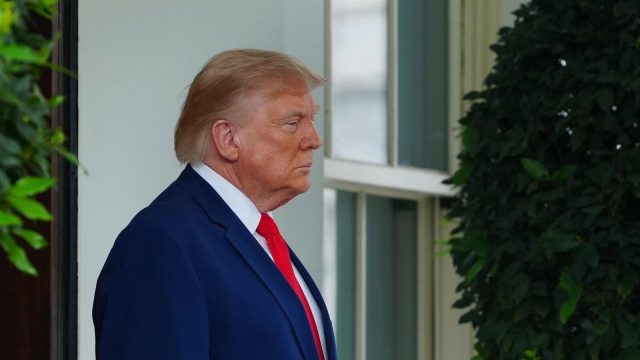
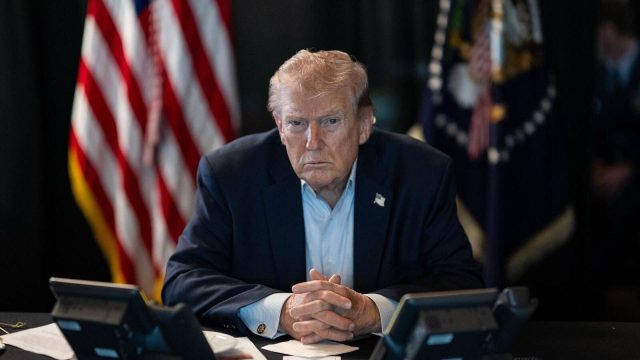
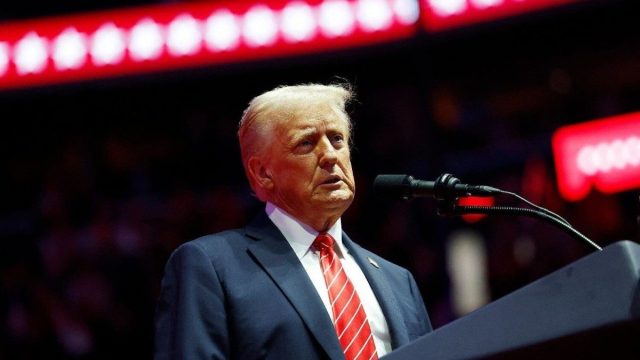
President Donald Trump announced on October 15 on his social network Truth Social that he was canceling Defense Secretary Pete Hegseth's plan to broadcast the execution of Nidal Malik Hasan live. Hasan is the former Army psychiatrist sentenced to death for the mass shooting at the Fort Hood military base in Texas in November 2009, in which 13 people were killed and at least 31 others wounded. The execution, set for December 3 by firing squad, will go ahead as planned, but without a public broadcast. The decision followed a wave of condemnations from US and German Catholic bishops, civil society organizations and a large majority of the public.
The crime and the sentence
Hasan, who reached the rank of major in the Army, became increasingly radicalized after learning he was to be deployed to Afghanistan or Iraq. On May 9, 2009, he entered the Fort Hood base armed with two pistols and opened fire, killing 13 people and wounding at least 31, until a police bullet left him paralyzed. He shouted "Allahu Akbar" during the attack. It later emerged that he followed Islamic law, had attended a mosque in Virginia led by the pro-terrorism imam Anwar al-Awlaki, and had argued that Muslims should rise up against the US Army. He was convicted in August 2013 and sentenced to death less than a week later. The execution will be the first by firing squad in the US Army since World War II.
The original announcement and Trump's reversal
The dispute began on October 8, when Hegseth said in an interview with Real America's Voice News that the execution would take place on December 3 and would be public. "We'll make sure people can see it, that it's public," the defense secretary said, confirming afterward on social media that this meant a live broadcast.
In his Truth Social post, Trump described Hasan as "a very bad and evil man" and said the broadcast "could have been a powerful deterrent for the world to see how America treats terrorists." Still, he added that "many very good and well-meaning people would prefer not to watch him die, through broadcast or any other visual device." Trump said the execution "will be carried out, as scheduled, by firing squad, but this act will not be broadcast," and said immediate family members of the victims may witness it if they wish.
Catholic bishops respond
The US bishops criticized the original plan. Archbishop Paul S. Coakley of Oklahoma City, president of the United States Conference of Catholic Bishops, denounced the plan as "a barbaric promotion of the culture of death" that "must be reconsidered." Archbishop Timothy P. Broglio of the Archdiocese for the Military Services, USA, also demanded that the plan be reconsidered. He encouraged any Catholic to seek an exemption from taking part in the firing squad, as they would with any action contrary to the teachings of their faith.
In his appeal, Broglio asked: "Do we really want to imitate the terrorists of this world and make a public spectacle of barbarically killing our adversaries?" and "Does exposing the public to his execution serve any purpose?" The Texas Catholic Conference of Bishops, in the state where Fort Hood is located, also condemned the plan.
In Germany, Archbishop Udo Markus Bentz of Paderborn, president of the German Justitia et Pax Commission, joined the criticism. "This media staging of death is reprehensible," he said. "When a state allows a person to be killed in front of cameras, it tramples on human dignity, which cannot be denied even to someone who has committed the gravest crimes." Bentz welcomed the US bishops' conference's criticism for saying that "the culture of death cannot be promoted in such a barbaric way," and demanded that "this spectacle" not be made available in Europe through digital media.
Church teaching on the death penalty
The Catholic Church's magisterium opposes capital punishment as a violation of the inherent sanctity of human life and calls for its abolition worldwide. In 2018, Pope Francis revised number 2267 of the Catechism of the Catholic Church to state that the death penalty is morally "inadmissible" in the modern world "because it attacks the inviolability and dignity of the person," and declared that the Church "works with determination for its abolition worldwide."
Pope Leo XIV repeated that teaching in a post on X on October 10, the World Day Against the Death Penalty. The earlier text of the Catechism acknowledged that "the traditional teaching of the Church does not exclude recourse to the death penalty" when absolutely necessary, while noting that such cases were "very rare, if not practically non-existent."
Catholic groups and public opinion
Krisanne Vaillancourt Murphy, executive director of Catholic Mobilizing Network, welcomed Trump's reversal but said the execution should not take place at all. "I am grateful that President Trump listened to the fierce opposition to the proposed idea of a live-broadcast military execution," she said. "We don't need to expose our corrections staff, military personnel or anyone else to the trauma of executions. We know the death penalty does not deter crime or make our communities safer."
A poll published on October 15 by The Washington Post, ABC News and Ipsos found that a large majority of Americans opposed Hegseth's plan to broadcast the execution. While 53 percent of Americans said they supported executing Hasan by firing squad, against 42 percent opposed, 80 percent said the execution should not be broadcast publicly. Opposition to the broadcast was the majority view in every political group: 91 percent of Democrats, 83 percent of independents and 64 percent of Republicans. Among Republicans who identify with MAGA (Make America Great Again), 55 percent also opposed the broadcast.
Based on reporting by José García for Iglesia Noticias. This article was translated and adapted from Spanish with the help of artificial intelligence.