International Cathedrals Day: ten cathedrals across Spain, from Burgos to Palma
International Cathedrals Day falls on October 19. A tour of ten cathedrals in Spain, from the Gothic spires of Burgos and the pilgrim destination of Santiago de Compostela to La Seu in Palma de Mallorca
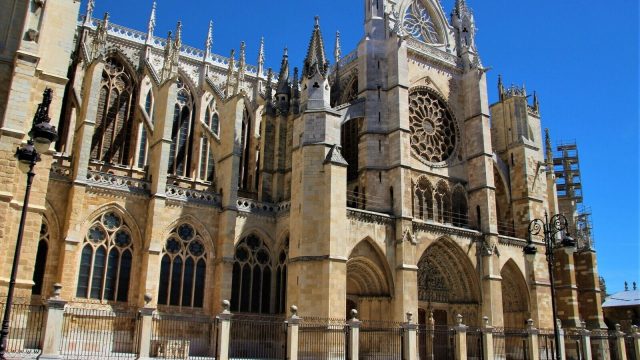
International Cathedrals Day falls on October 19 each year and is devoted to the historical, artistic and religious heritage of these churches. For centuries cathedrals have served as more than places of worship. They have been part of the history of entire cities, have witnessed major events and hold architectural treasures within their walls.
Spain has cathedrals throughout the country. A restoration of the Cathedral of Santa María in Vitoria, in the Basque Country, has revealed more about how it was built in the Middle Ages. The Cathedral of Cádiz, on the Atlantic coast of Andalusia, has a gilded dome that faces the ocean. The Cathedral of Girona, in Catalonia, has one of the widest Gothic naves in the world. They are a few examples among churches across Spain that hold centuries of history, art and tradition.
To mark the day, Church Gazette has put together a tour of ten Spanish cathedrals, their origins, their principal treasures and some of the details that set them apart.
1. Burgos Cathedral: eight centuries under Gothic spires
The Cathedral of Santa María in Burgos, in northern Castile, is one of the best known Gothic buildings in Europe. Its history began in July 1221, when the first stone of the new church was laid at the initiative of King Ferdinand III of Castile and Bishop Mauricio. The city sits on one of the main routes of the Camino de Santiago, the pilgrimage road to Santiago de Compostela, and was then going through a period of economic and religious growth that encouraged the building of a cathedral to match its standing.
The builders took the great French cathedrals as their model, above all Reims and Bourges. Construction ran on for centuries, which allowed features of different architectural styles to be added along the way. Classic Gothic, Flamboyant Gothic and Renaissance work all sit side by side in the finished building.
Among its most recognizable features are the openwork spires that crown the two towers of the main facade, built in the 15th century by Juan de Colonia. Their design, a complex structure of pierced stone, gives the building the outline that has become a symbol of Burgos.
Inside are the Chapel of the Condestable, built in the late 15th century and regarded as one of the major works of late Gothic, and the Escalera Dorada, or Golden Staircase, made by Diego de Siloé in the 16th century. The lantern tower over the crossing lets daylight into the church from above.
The cathedral is also tied to Spanish history. The remains of El Cid and his wife, Jimena, two figures of medieval Castile, lie inside. Another feature is the Papamoscas, an automaton set above a clock that opens its mouth as it strikes the hours and has drawn the curiosity of visitors for generations.
UNESCO named Burgos Cathedral a World Heritage Site in 1984.
2. Santiago de Compostela Cathedral: the end of an ancient road
The Cathedral of Santiago de Compostela, in Galicia in Spain's northwest, is one of the great pilgrimage centers of Christianity and the end point of the various routes of the Camino de Santiago. Its history goes back to the ninth century, when, according to Christian tradition, the remains of the apostle James the Greater were found at the site.
The discovery gave rise to a first shrine, which was enlarged over time to take in a growing number of pilgrims. Work on the present Romanesque cathedral began in 1075, during the reign of Alfonso VI, and continued through the 11th and 12th centuries. Gothic, Renaissance and Baroque elements were added later and changed its original appearance.
Its best known front is the Obradoiro facade, built mainly in the 18th century to a design by Fernando de Casas Novoa. The Baroque structure shelters part of the Romanesque facade and is what pilgrims see when they reach the square at the end of their journey.
One of the church's treasures is the Pórtico de la Gloria, carved by Master Mateo in the 12th century. The sculptural ensemble depicts scenes of Christian salvation and is considered one of the masterpieces of European Romanesque art.
Beneath the high altar is the crypt where the remains attributed to the apostle James are venerated. Pilgrims traditionally embrace the image of the saint in the chamber behind the high altar.
Among its more unusual features is the Botafumeiro, a large censer that swings across the transept during certain liturgies. The present one weighs about 53 kilograms (117 pounds) and can reach speeds close to 70 kilometers per hour (43 miles per hour). Eight men known as tiraboleiros coordinate their movements to set it swinging.
The cathedral remains the religious center of Santiago de Compostela.
3. Seville Cathedral: the largest Gothic church in the world
The Cathedral of Santa María de la Sede in Seville is considered the largest Gothic cathedral in the world. Construction began in the early 15th century on the site of the old Almohad main mosque, which had been consecrated for Christian worship after Ferdinand III took Seville in 1248.
The former mosque served as a Christian church for more than a century. As the city grew and gained in importance, plans were drawn up for a new cathedral on an enormous scale. The main work was carried out during the 15th century, though chapels and decorative elements continued to be added in later periods.
One of its best known features is the Giralda, built in the 12th century as the minaret of the Almohad mosque. After the Christian conquest it became the bell tower, and in the 16th century it was given its Renaissance top, designed by Hernán Ruiz the Younger.
The tower is crowned by the Giraldillo, a statue representing the triumph of the Christian faith. Instead of a conventional staircase, the Giralda has 35 interior ramps, which made the climb to the top easier.
Inside the cathedral is the main altarpiece, a carved and gilded wooden work showing scenes from the life of Christ and the Virgin Mary. The Royal Chapel holds the remains of St. Ferdinand, the king who took Seville in 1248, along with other members of the royal family.
Another of the most visited spots is the funeral monument of Christopher Columbus, carried by four figures representing the old kingdoms of Castile, León, Aragon and Navarre. The cathedral also holds paintings, sculpture and silverwork collected over the centuries.
UNESCO declared Seville Cathedral a World Heritage Site in 1987, together with the Real Alcázar and the Archivo de Indias, the archive of Spain's empire in the Americas.
4. The Mosque-Cathedral of Córdoba: centuries of history under a forest of columns
The Mosque-Cathedral of Córdoba, in Andalusia, is one of the most unusual monuments in Spain, a building whose architecture takes in several periods of Iberian history. Its origins lie in a site linked in late antiquity to the Visigothic basilica of St. Vincent, before it became one of the main religious centers of al-Andalus.
In 785 Abd al-Rahman I began building the great mosque of Córdoba, which was enlarged over the following centuries as the city grew in political, cultural and religious importance. Work carried out under Abd al-Rahman II, al-Hakam II and Almanzor turned it into a complex of extraordinary size.
Among its most recognizable features is the forest of columns and two-color horseshoe arches, which combine voussoirs of pale stone and red brick. The design raised the visual height of the space and produced an image that has become a symbol of the art of al-Andalus.
The mihrab, built during the caliphate of al-Hakam II, is decorated with mosaics of Byzantine inspiration. Its ornamentation reflects the artistic wealth Córdoba reached in the 10th century, when the city was one of the main cultural centers of the Mediterranean.
After Ferdinand III took Córdoba in 1236, the building was consecrated for Catholic worship. Chapels, altars and other Christian elements were added over the following centuries, and in 1523 work began on the crossing and the Renaissance main chapel.
Inside are the choir stalls, carved by Pedro Duque Cornejo in the 18th century, and the main altarpiece. The bell tower was built around part of the old minaret and altered in several stages.
UNESCO declared the Mosque-Cathedral of Córdoba a World Heritage Site in 1984.
5. León Cathedral: light and color
The Cathedral of Santa María de Regla in León, known as the Pulchra Leonina, is one of the clearest examples in Spain of Gothic architecture under French influence. The medieval building went up mainly in the 13th century, following models such as the cathedrals of Reims and Amiens, though it took on features of its own.
The site has a much longer history. The cathedral stands over Roman baths that were later used as part of a palace complex linked to the monarchy of León. Earlier churches stood there before work began on the present Gothic cathedral.
The building is defined by the role light plays in its architecture. Unlike other large medieval churches, its walls were designed to hold enormous windows, so that stained glass fills much of the surface usually built in stone.
The cathedral has 737 stained glass windows covering about 1,765 square meters (19,000 square feet), made in different periods. Many show biblical scenes, saints, religious figures and plant motifs, and the colors change through the day with the position of the sun.
The windows are not only decorative. In Gothic architecture light carried a religious meaning tied to the divine presence and to spiritual ascent. The interior of León Cathedral shows how medieval architects used architecture and art to convey a message of faith.
Its ambulatory, chapels and choir hold sculpture and other works of art. The portals of the west front are carved with religious scenes and figures.
The cathedral has had serious structural problems over its history, particularly with the stability of its walls and vaults. It underwent a thorough restoration in the 19th century.
6. Toledo Cathedral: eight centuries of history and art
The Primatial Cathedral of Santa María in Toledo, in central Spain, is one of the principal works of Spanish Gothic architecture. Construction began in 1226, during the reign of Ferdinand III, at the initiative of Archbishop Rodrigo Jiménez de Rada. In 2026 the cathedral marks the eighth centenary of the start of the work with a program of religious, cultural and heritage events.
The building went up on the site of Toledo's old main mosque and took more than two centuries to complete. Its architecture reflects the influence of the great French cathedrals and includes features of Spanish artistic tradition, in a building of five naves and numerous chapels.
The main facade, facing the city hall square, has three large portals decorated with religious sculpture. Inside, the width of the naves, the height of the vaults and the ornamentation reflect Toledo's standing as the primatial see of Spain.
One of its treasures is the processional monstrance made by Enrique de Arfe, which is carried each year in the Corpus Christi procession. That celebration is one of the main religious traditions of Toledo and is closely tied to the history of the cathedral.
The choir has work by Rodrigo Alemán, Alonso Berruguete and Felipe Bigarny. The sacristy holds paintings by El Greco, among them El Expolio. The cathedral also has works by Titian, Goya and Caravaggio.
One of its most unusual features is the Transparente, a Baroque composition by Narciso Tomé completed in 1732. It combines architecture, sculpture and marble: daylight enters through an opening and reaches the space behind the high altar.
Among the initiatives announced by the cathedral for the centenary is an exhibition titled Primada, built around a selection of historic works kept in the church and covering eight centuries of art and spirituality.
7. The cathedrals of Salamanca: two churches and an astronaut on the facade
Salamanca, in western Spain, has two cathedrals, built in different periods, that are joined together and both open for worship. Work on the Old Cathedral began in the 12th century. Work on the New Cathedral began in 1513 and was completed during the 18th century.
The Old Cathedral is one of the main examples of Romanesque architecture in Castile and León, though it also has Gothic features. It was built during a period of growth in the city tied to the development of its religious and cultural institutions in the Middle Ages.
Among its best known features is the Torre del Gallo, crowned by a dome decorated with stone scales. The main altarpiece is made up of panels painted by Nicolás Florentino showing scenes from the life of Christ and the Virgin Mary.
The New Cathedral is notable for its size, the height of its vaults and the decoration of its facades. Although construction began when the Renaissance had already spread across Europe, the building is mainly Gothic in structure, with Renaissance and Baroque elements added later.
One of the best known details is on the Portada de Ramos of the New Cathedral, where a small figure of an astronaut is carved in stone. It has puzzled visitors for years, though the explanation is far more recent than it might appear.
The astronaut was added during a restoration in 1993, following the practice of including elements that identify the period of the work. The cathedral says the figure is one of a set of contemporary details added at that time.
Visitors can also tour the medieval towers, which take in several parts of the complex and offer panoramic views of Salamanca.
The two cathedrals are part of the city's historic center, which UNESCO declared a World Heritage Site in 1988.
8. Segovia Cathedral: the Lady of Cathedrals
The Cathedral of Our Lady of the Assumption and St. Frutos in Segovia, north of Madrid, is known as the Dama de las Catedrales, the Lady of Cathedrals, a nickname tied to its proportions and the slenderness of its architecture. It stands beside the Plaza Mayor.
Construction began on June 8, 1525, after the old cathedral, which stood next to the Alcázar, was badly damaged during the Comuneros revolt against the Crown. The new church was conceived as a joint undertaking by the Crown, the cathedral chapter and the city.
The architect Juan Gil de Hontañón began the project, which kept a mainly Gothic structure even though work started when the Renaissance was fully under way. Construction lasted more than two centuries, and the cathedral was consecrated in 1768.
The building has three naves, ribbed vaults and numerous chapels, along with paintings, sculpture and silverwork and a cloister moved from the old cathedral.
One of its most recognizable features is the tower, originally crowned by a large wooden spire. That structure brought its height to about 108 meters (354 feet), making it one of the tallest towers of its day.
On September 18, 1614, a lightning storm set off a fire that destroyed the original spire. The chapter rebuilt the upper section to a different design, which is what stands today.
The tower is open to visitors, who can see several historic spaces and take in views of Segovia, including much of the old town and the surrounding area.
The cathedral is also tied to St. Frutos, patron of the diocese, whose feast day falls on October 25.
9. Ávila Cathedral: the church built into a city wall
The Cathedral of El Salvador in Ávila, west of Madrid, is unusual among Spanish churches because of its close relationship with the city's medieval walls. Unlike other large Gothic cathedrals, its exterior has a strongly defensive character, a reflection of Ávila's strategic importance in the Middle Ages.
Construction began in the medieval period and went on in stages, taking in Romanesque, Gothic and Renaissance elements. The result combines the solidity of a fortress with the height and light of Gothic religious architecture.
The most distinctive part of the church is its east end, known as the Cimorro, which forms part of the defensive system of the walls. Its thick walls and fortified appearance contrast with the interior, where the vaults, columns and windows are far lighter.
In Ávila the cathedral was not only built as a place of worship but ended up as part of one of the best preserved medieval defensive systems in Europe.
Inside are works of religious art including the main altarpiece, with paintings by Pedro Berruguete, Santa Cruz and Juan de Borgoña, and the tomb of Alonso Fernández de Madrigal, known as El Tostado, carved by Vasco de la Zarza.
The cathedral changed over the following centuries. Its official history records that in 1595 work began on the Chapel of San Segundo and that the exterior of the east end was reinforced with granite, which added to its defensive appearance.
The complex also includes chapels, the cloister and the cathedral's other buildings.
10. Mallorca Cathedral: where the light draws a figure eight
The Cathedral of Santa María in Palma, known as La Seu, is one of the main monuments of Mallorca, in the Balearic Islands, and one of the principal examples of Levantine Gothic, the Gothic architecture of Spain's Mediterranean coast. It stands beside the Mediterranean and dominates the skyline of Palma.
Its history is tied to the conquest of Mallorca by James I in 1229. The church was built over the following centuries and took in architectural and artistic elements from different periods.
One of its most notable features is the height of the central nave, about 44 meters (144 feet), which places it among the tallest Gothic cathedrals in Europe. Its large windows give daylight a central role inside.
The east rose window, known as the Ojo del Gótico, or Gothic Eye, is made up of hundreds of pieces of colored glass. It is at the center of a phenomenon of light that occurs twice a year.
Around February 2 and November 11, sunlight passes through the main rose window and projects its image below the rose window on the opposite facade, creating a shape resembling the number eight. The event is known as the Fiesta de la Luz, the Festival of Light, and draws many visitors.
The cathedral also carries the mark of modern Spanish artists. Between 1904 and 1915 Antoni Gaudí carried out a major renovation promoted by Bishop Pere Joan Campins, intended to reorganize the liturgical space, improve the view of the altar and increase the participation of the faithful.
Decades later the Mallorcan artist Miquel Barceló worked on the Blessed Sacrament Chapel, adding a contemporary piece inspired by Gospel episodes, above all the multiplication of the loaves and fishes. He carried out the work between 2000 and 2007.
The cathedrals remain places of worship, prayer and gathering for thousands of the faithful.