Spain is second largest giver to papal mission fund as Domund turns 100
World Mission Sunday, known in Spain as Domund, marks its centenary this Sunday. Spain, the second largest contributor after the United States, sent 10,698,492 euros in 2025 to the papal fund that supports 1,133 mission territories
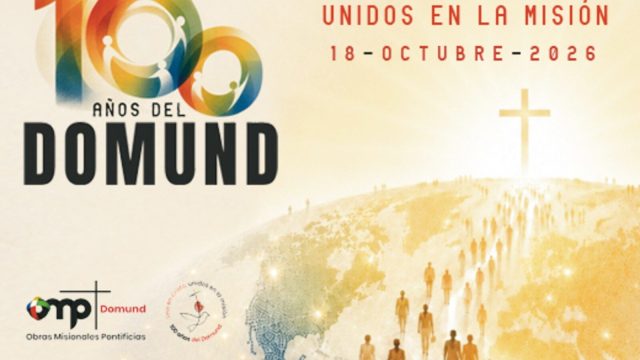
The Church marks World Mission Sunday this Sunday. The day, known in Spain as Domund, turns 100 this year. What the Pontifical Mission Societies (Obras Misionales Pontificias, OMP) collect around the world allows the pope to support the work of missionaries each year on an equal basis. The Church has 1,133 mission territories in Africa, Asia, Oceania and parts of the Amazon region of the Americas. The theme for 2026 is "One in Christ, united in mission."
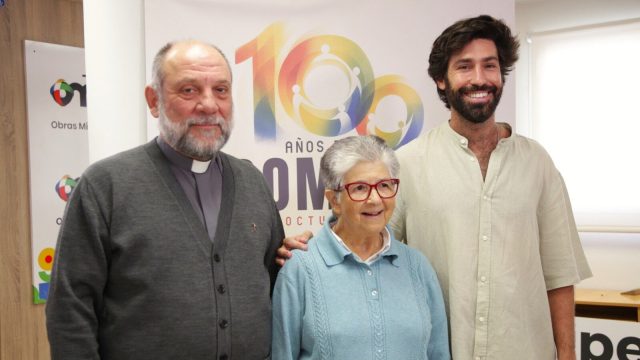
Two missionaries spoke about their work this morning. Mari Carmen Gutiérrez, a Missionary of Christ Jesus, has spent 57 years in the Democratic Republic of Congo, with a seven-year break in the Republic of Chad. She knew from a young age that she wanted to be a missionary, and went out year after year with the Domund collection boxes to ask for money for the missions. "We asked and we received. Domund never refused us anything," she said, recalling how she requested and distributed those funds each year as secretary to the bishop of the Vicariate of Mongo.
In her decades in the field, Gutiérrez taught classes, prepared people for the sacraments, supported a program for malnourished children and formed local vocations. What gave her the most joy was announcing the Gospel to people who had never heard anything like it, in what is known as first evangelization. "You cannot imagine the impact the Gospel has on people when they hear it for the first time," she said. That region now has strong Christian communities, with parishes built thanks to Domund.
From volunteering to a missionary vocation
Carlos Bobillo came to Burundi looking for adventure and charitable work. From an atheist family and upbringing, he never expected to find faith in the small African country. "How can you be in the last place on earth, surrounded by suffering, with that joy in your eyes? That is not of this world," he said of the missionaries he met there.
Bobillo went back every summer, and then left his job at a law firm to set up the NGO Komera, which has backed cooperation projects including schools, universities, wells and solar panels. From January he will be the first ad gentes missionary sent by Hakuna, a Catholic movement founded in Spain, to "help people have a personal encounter with Christ" and to support a maternity center. Spain currently has 9,482 active missionaries, one of the largest numbers of any country.
Centenary figures
Since Pope Pius XI established Domund 100 years ago, the number of dioceses classed as mission territory has quadrupled, from 297 in 1925 to 1,133 in 2025. Catholics in mission territories have gone from 9.6 million a century ago to almost 347 million now, about the population of the United States.
The number of priests and religious sisters in the missions has multiplied tenfold, from 12,239 in 1925 to 377,891 in 2025. Over these 100 years, an average of 9,000 new Catholics have been baptized daily in the missions. Each day, two priests have been ordained and five religious sisters have made their consecration. One parish and three schools have been built daily on average. The share of Catholics in mission territories has risen from 2 percent to 9 percent of the population.
Spain, the second largest contributor
Spain is the second largest contributor in the world to the Universal Solidarity Fund, after the United States. In 2025 the fund took in 69,790,871 euros. Spain sent 10,698,492 euros to the missions, which helped 173 dioceses in 22 countries.
OMP's grants are the yearly support that every mission territory receives from the pope. The money arrives in a steady flow and makes the Church's presence and mission possible in those areas. Close to half the fund goes to ordinary grants for day-to-day expenses. Without that money, which other institutions do not provide, many mission territories would find it hard to continue their work of evangelization and charity.
The rest goes to special projects that the mission territories request each year: building parishes, housing for missionaries, means of transport and training for catechists. These projects gradually build up and form the local Church.
Taking part from home
José María Calderón, director of the Pontifical Mission Societies, said Domund is not only the task of missionaries but of everyone. "Collaboration with the missions can be personal, spiritual through prayer, or financial," he said. Financial collaboration, he said, is a real share in the Church's mission.
Spain has several programs of support: 60,000 sick people offer their suffering in prayer as missionaries, and 314 prayer gatherings were held in 2025. More than 10,000 young Spaniards give up their summer vacations for the missions, and over the year 1,855 volunteers work in diocesan offices, parishes and deaneries. Every euro given is literally divided among the 1,133 mission territories, so that those who support Domund are present in all of them year after year.
Global reach
There are mission territories in 138 countries. They cover practically all of Africa, Asia apart from most of the Philippines, and Oceania apart from Australia. There are 70 in the Americas, most of them apostolic vicariates in the Amazon basin. Two-thirds of the world's population lives in these territories. They make up a third of the dioceses of the universal Church, and four of every 10 baptisms worldwide take place in them.
More than half of the world's future priests are trained in mission territories. More than half of the Catholic Church's schools, and 26 percent of its social institutions, including hospitals, orphanages and residential homes, are in the missions. The Church runs 124,309 schools and 26,318 social institutions in mission territories.
The share of African Catholics in the worldwide Church has grown. In 1978, 7 of every 100 Catholics in the world were African. Today the figure has tripled to 22.
October events and centenary releases
Through October, OMP is taking Domund into the streets with "El Domund al descubierto" (Domund Uncovered), an exhibition accompanied by mission events. This year it is in Vitoria, the diocese where the day was first held. For the centenary, the clothing brand Alvaro Moreno and the illustrator Pati.te have created a commemorative T-shirt, with all proceeds going to Domund. OMP has also released the song "Envíame a mí" (Send Me), produced by Pablo Cebrián and performed by Chechu Reguart, Estefanía Benedicto and Fr. Jaime Salmoreno, intended as the mission song for the coming years.