Two priests describe ministering at the scene of Spain's Urda train crash
Priests of the Archdiocese of Toledo reached the site of Wednesday's collision near Urda, in central Spain, where at least 69 people died. One of them gave general absolution to the dying, as canon law allows in disasters
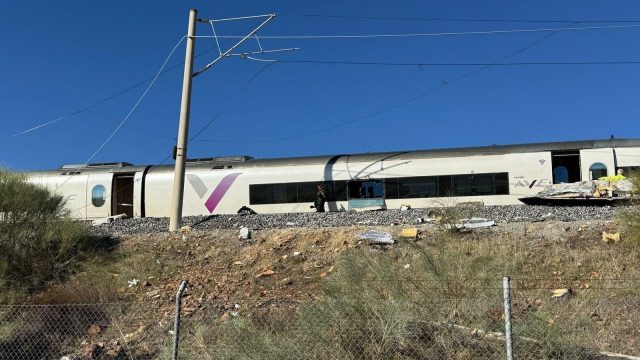
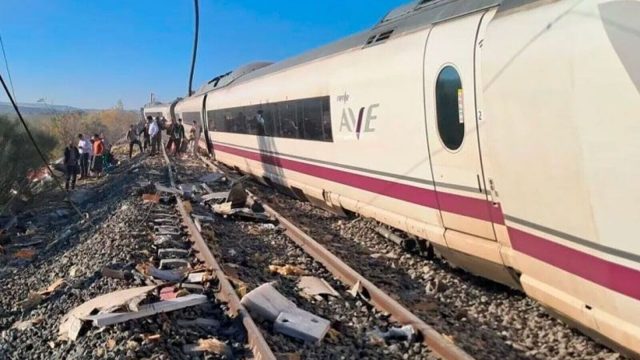
Two priests from the province of Toledo, in central Spain, gave emergency pastoral care after a train crash near Urda on Wednesday morning. A Renfe train traveling at 200 kilometers per hour (124 miles per hour) struck the rear cars of an Iryo train at kilometer 118 of the Madrid-Seville line. At least 69 people died and dozens were injured, several of them critically. Renfe is Spain's state rail operator and Iryo a private competitor.
General absolution at the crash site
Father Fernando Fernández de Bobadilla, 71, pastor of Los Yébenes, was on his way to a health center for a routine appointment when a friend called to tell him what had happened. He turned around at once and was one of the first to reach the site near Urda, arriving ahead of much of the emergency response. He found people wandering in shock, the seriously injured lying on the ground and bodies in the open.
Unable to attend to each dying person individually, he gave general absolution, which the theology of the sacrament of penance expressly provides for in disasters without prior individual confession. "I gave general absolution. The Vatican recommends it in these cases," he said. He also said he could not anoint every seriously injured person individually.
Fernández de Bobadilla said it was the only thing he could offer at that moment: spiritually preparing people who might be about to die. "I did what I felt I could do at that moment and what no one else could do: forgive their sins and prepare them in case the Lord was calling them to heaven," he said. Along with the sacraments, he helped the rescue teams, holding IV bags, supporting the heads of the injured and helping carry them on improvised stretchers. He kept praying for the dead as bodies were pulled from the cars. He left around 2 p.m., once the injured had been evacuated and firefighters confirmed that heavy machinery would be needed to move the cars.
Reflecting on what his presence meant in the middle of the chaos, he said that when words fall short and reasoning is useless, what remains is being physically close and listening. He said he believed that even if he could not reach an injured person's heart, God could: "My role as an intermediary may be simple and apparently useless, but God knows how to make use of the cracks."
Support and consolation at the scene
Father José Miguel Fernández, pastor of Urda, had an equally intense day. He received a call from Archbishop Francisco Cerro Chaves of Toledo, who told him the scale of the disaster. He went straight there and arrived around 11 a.m., two hours after the collision, when dozens of volunteers, many of them his parishioners, had already improvised a relief chain. Residents of Urda were driving the injured into town in their own cars so they could receive medical care.
The first thing he saw was a long line of people coming out of the cars badly hurt. "These are moments that, humanly speaking, break your heart, but very quickly our minds turn to God and we look to heaven," he told Nicolás de Cárdenas, correspondent for EWTN News Español.
Fernández said he particularly remembered one injured man who came up to him and said: "Father, give me a hug, I'm alive." That encounter set the tone for the whole morning. He decided that this would be how he would be present that day: giving hugs, holding hands and staying with people who could not take in what had just happened to them. He later went to the municipal sports hall in Urda, which had been turned into a field hospital, where relatives were waiting desperately for news.
He tried to calm them and give them hope. "What matters is hope. Have hope. Trust in God, because God is good," he told them. Fernández said he often ended up weeping alongside the people he was with. "We are priests, of course, but we are human, and the pain and grief of our brothers and sisters affects us too," he said.
The archbishop's response and the Vatican's
Cerro was at the crash site with other priests, who prayed for the dead as their bodies were recovered. Fernández de Bobadilla praised the coordination among the emergency services deployed in the area.
Pope Leo XIV expressed his deep sorrow over the disaster. In a telegram signed by Vatican Secretary of State Cardinal Pietro Parolin, the pope promised his prayers for the eternal rest of the dead. He sent his condolences to the victims' families, along with words of encouragement and his wish for a swift recovery for the injured. The message, addressed to Cerro, also acknowledged the work of the rescue teams, whom the pope encouraged to persevere in their rescue efforts. Leo XIV gave his apostolic blessing to all those affected as a "sign of hope in the risen Lord." The Spanish Bishops' Conference, Spain's counterpart of the USCCB, along with many bishops and dioceses, also expressed dismay and condolences over the rail disaster.