Head of Mexico's bishops says the Church cannot stay silent on politics
Bishop Ramón Castro of Cuernavaca, president of the Mexican Bishops' Conference, told critics who want the bishops out of public life that silence would betray the Gospel, and spoke about threats against the bishop of Aguascalientes
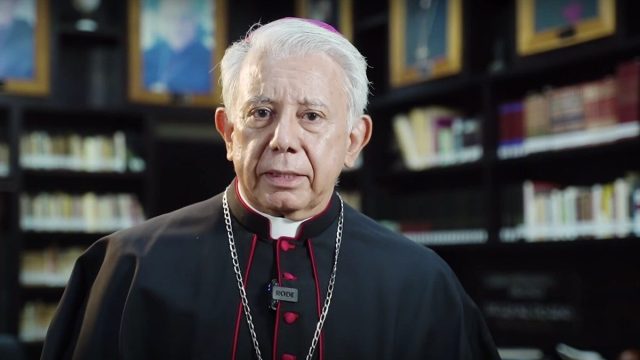
Bishop Ramón Castro of Cuernavaca, president of the Mexican Bishops' Conference (CEM), Mexico's counterpart of the USCCB, responded on October 4, 2026, to those who want the bishops to keep quiet about the country's social and political problems. In his Sunday homily he said: "we cannot stay silent."
Castro said Christians have a responsibility to help build a "society where the dignity of each person is recognized and where violence stops being a habitual way of resolving conflicts." Social action, he said, is intrinsic to the Gospel: "social action is not an add-on, it is not an option in the Christian life: it is born of the same Gospel we celebrate."
Criticism of those calling for episcopal silence
Castro spoke directly to those who want the bishops to withdraw from public life. Those voices, he said, want to reduce the Church to "shutting ourselves in the sacristy." Evangelization, he said, cannot be confined within the walls of a church. "We cannot; if we did, we would betray the Gospel," he said.
Threats against Bishop Espinoza Jiménez
In the same homily, Castro referred to the threats and attacks against Bishop Juan Espinoza Jiménez of Aguascalientes, who has openly questioned several decisions of the Mexican government. In his homily on September 27, Espinoza said the "proposals, programs and promises" of politicians should be judged by their concrete results.
"Today they talk to us at the national level about freedom and plurality, but they threaten prison for those who think differently or who oppose decisions that harm our nation," Espinoza said. He also criticized those who invoke national sovereignty while allowing the country to fall into the hands of crime, ignoring the crisis of the disappeared in Mexico.
Espinoza urged the faithful to "review our own consistency" and to demand a culture of "accountability" from those in government and from citizens themselves.
Investigation into online threats
After those remarks, a message attributed to the content creator José Lápiz circulated offering 40,000 pesos, about $2,200, to attack the bishop. The message was deleted, but the state prosecutor, Manuel Alonso García, announced on October 7 that the Cybercrime Unit had opened an investigation. He called it a "sensitive matter" that could not be overlooked.
García said the case is not isolated and that other threatening messages against the bishop have appeared. Authorities are committed to investigating thoroughly and will not play down any information that could pose a risk to people's safety, he said.